
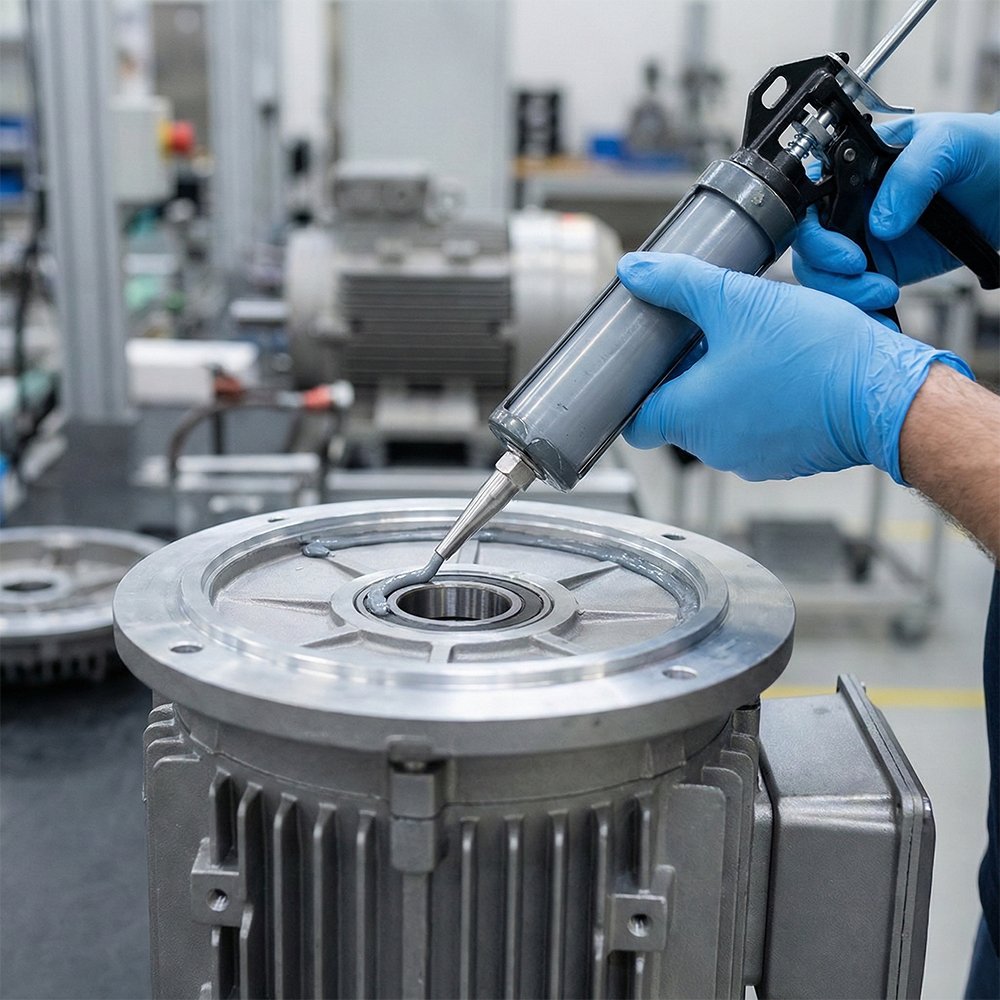
Electric Motors
Adhesives & Sealants in Electric Motor Assembly
- Sealing suitable motor housings, covers and flange interfaces
- Bonding suitable rigid metal motor components and assembly interfaces
- Securing suitable motor housing, mounting and heavy-duty threaded fasteners
- Protecting selected interfaces from moisture, dust and environmental exposure
Bonding, Sealing & Threadlocking for Electric Motors
Electric motors operate through continuous rotation and may be exposed to vibration, thermal cycling, moisture and demanding mechanical conditions. Adhesive technologies can support specific motor assembly interfaces where bonding, sealing or threadlocking is required.
Fasto solutions can be evaluated for motor housing and flange sealing, rigid metal component bonding, motor and mounting fasteners, selected component interfaces and environmental sealing applications.
The appropriate product should be selected according to the actual substrate, joint geometry, load, temperature, vibration, environmental exposure and manufacturing process.
- Resistance to vibration and mechanical movement
- Thermal cycling and operating-temperature compatibility
- Moisture, dust and environmental sealing
- Reliable bonding of suitable rigid metal components
- Secure fastening of suitable threaded assemblies
- Compatibility with the intended manufacturing process
Critical Adhesive & Sealant Applications in Electric Motors
Different motor components require different adhesive technologies. Fasto's application approach connects the material technology with the assembly requirement.
Motor Housing Sealing
Sealing suitable housing, cover and flange interfaces to help protect the assembly from environmental exposure.
- Housing sealing
- End-cover sealing
- Flange interface sealing
- Environmental protection
Flange & Joint Sealing
Silicone sealants can be considered for suitable flange and joint interfaces requiring flexible sealing.
- Machined flange interfaces
- Joint sealing
- Thermal movement accommodation
- Leak and environmental protection
Rigid Metal Bonding
Structural adhesive solutions for suitable rigid metal components and motor assembly interfaces.
- Metal-to-metal bonding
- Rigid component assembly
- Selected motor interfaces
- Vibration-resistant bonding
Fastener Threadlocking
Threadlocking solutions for suitable motor housing, mounting and heavy-duty threaded fasteners.
- Housing bolts
- Mounting fasteners
- End-cover fasteners
- Vibration loosening prevention
Component Assembly
Adhesive bonding of selected components where an engineered adhesive assembly method is required.
- Selected rigid components
- Assembly bonding
- Close-fitting interfaces
- Permanent component retention
Environmental Protection
Selected sealing applications designed to help protect interfaces from moisture, dust and environmental exposure.
- Moisture protection
- Dust protection
- Environmental sealing
- Outdoor equipment protection
Adhesive & Sealant Solutions for Electric Motors
Three key Fasto products can be positioned around the primary bonding, sealing and fastening requirements shown in the Electric Motors application catalogue.

Fasto SA26
Structural adhesive solution for suitable rigid metal bonding applications in electric motor assemblies, component assembly and selected structural interfaces.
View Product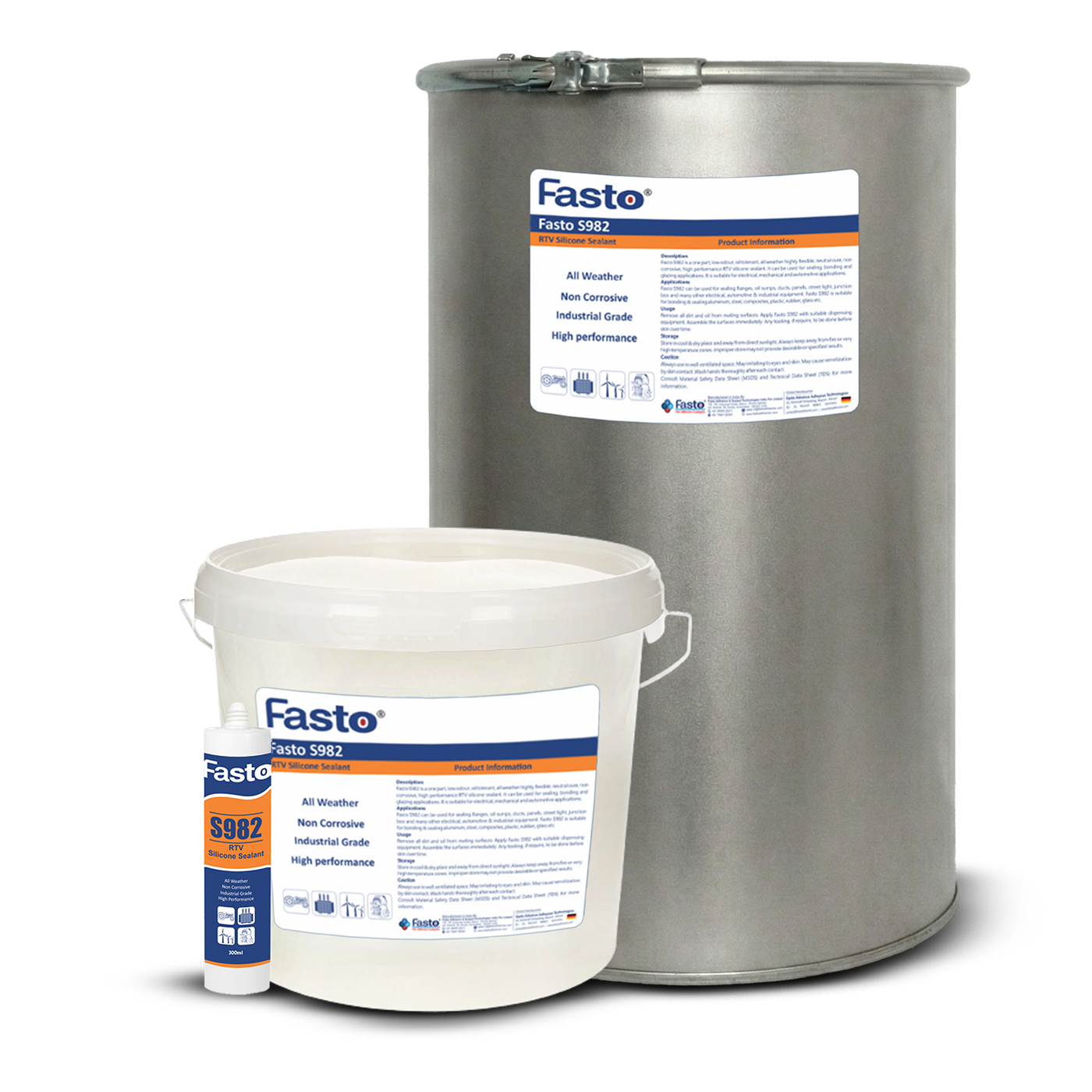
Fasto S982
Neutral-cure RTV silicone sealant for suitable motor housing, flange, end-cover and joint sealing applications.
View Product
Fasto A162
Threadlocking solution for suitable heavy-duty threaded assemblies including motor housing bolts, mounting fasteners and end-cover fasteners.
View ProductMatch the Product to the Motor Assembly
Product selection should follow the actual assembly requirement, substrate and operating environment.
Why Adhesive Technology Matters in Electric Motors
Correctly selected adhesive and sealant technologies can contribute to reliable assembly at specific motor interfaces.
Assembly Reliability
Supports suitable bonding, sealing and fastening requirements across motor assemblies.
Environmental Sealing
Suitable sealant solutions can help protect selected interfaces from moisture and environmental exposure.
Fastener Security
Threadlocking compounds can help reduce unwanted loosening in suitable threaded assemblies.
Component Bonding
Structural adhesives can provide an alternative joining method for suitable rigid component interfaces.
Select the Right Solution for the Motor Assembly
Adhesive and sealant selection should be based on the actual component, substrate, operating environment and assembly process.
Substrate
- Steel and other motor metals
- Aluminium components
- Metal coatings and finishes
- Engineering plastics where applicable
- Other joined or sealed materials
Application Type
- Rigid component bonding
- Housing and flange sealing
- End-cover sealing
- Threadlocking
- Selected environmental protection
Operating Conditions
- Vibration and dynamic loading
- Operating temperature
- Thermal cycling
- Moisture and humidity
- Oil and environmental exposure where applicable
Joint & Component Design
- Joint geometry
- Bond gap and clearance
- Mechanical load
- Required interface performance
- Fastener size and assembly design
Manufacturing Process
- Manual or automated application
- Assembly sequence
- Fixture and handling time
- Curing requirements
- Production cycle requirements
Validation
- Application-specific testing
- Bond or seal inspection
- Torque and fastening verification
- Environmental validation
- Production process validation
Adhesive Applications Across the Assembly Process
Surface Preparation
Prepare the relevant surface according to the selected product requirements.
Bonding
Apply structural adhesive to suitable component interfaces and assemble according to the validated process.
Sealing
Seal suitable motor housing, flange or joint interfaces with the selected sealant.
Threadlocking
Apply threadlocker to suitable threaded fasteners before assembly according to the validated application method.
Validation
Verify the finished assembly against the applicable manufacturing and performance requirements.