
UV Adhesives & Glue for Plastic
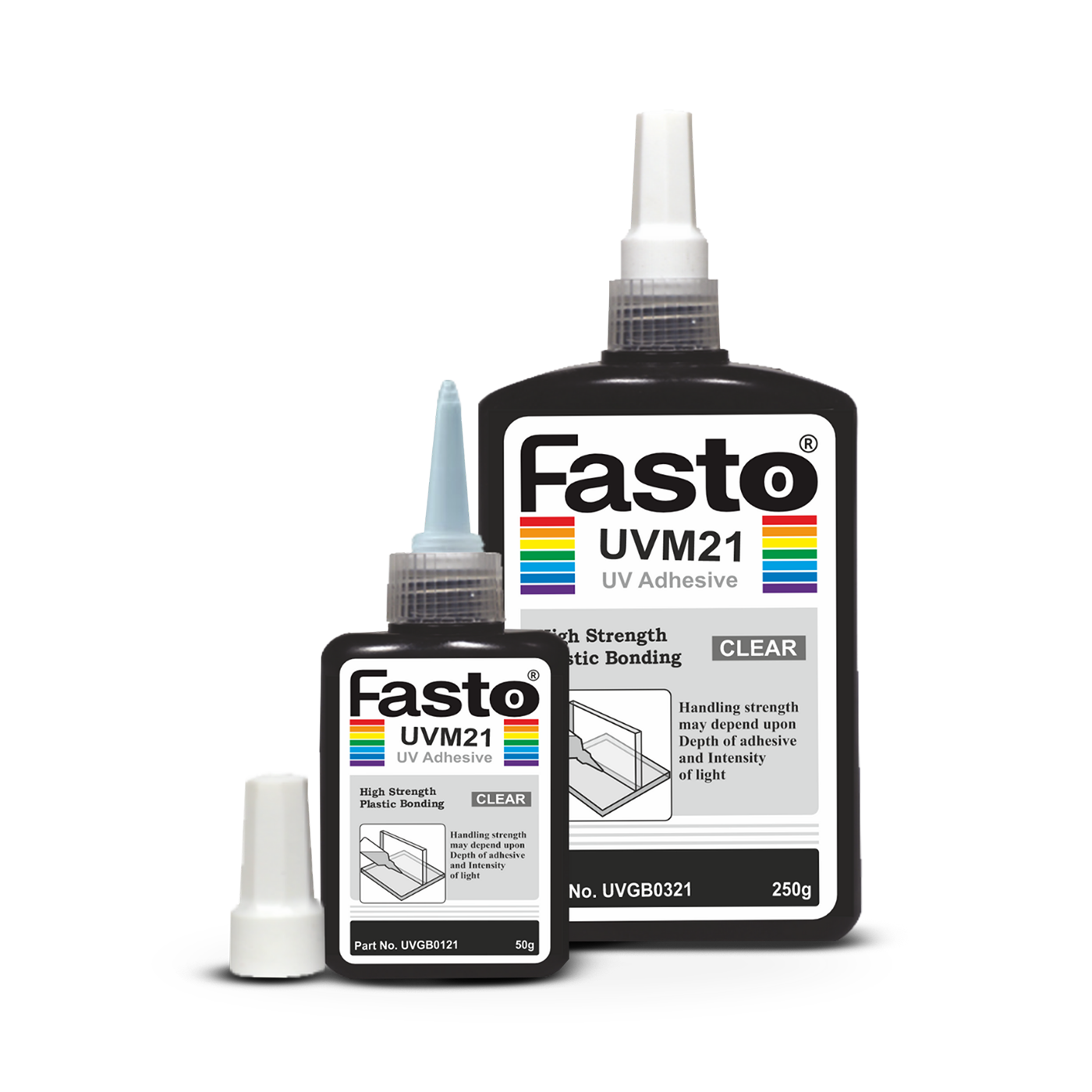
UV Adhesives & Glue for Glass
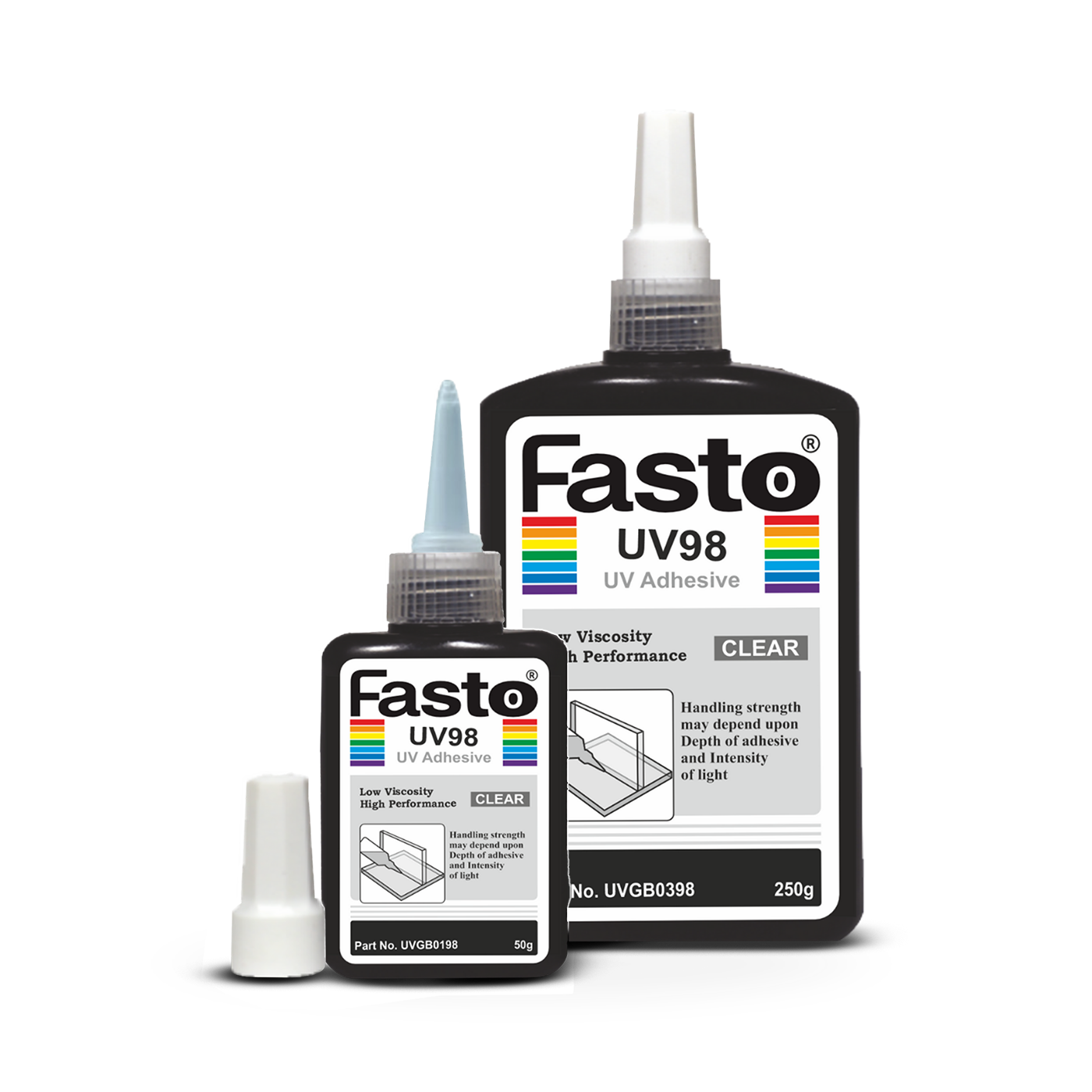
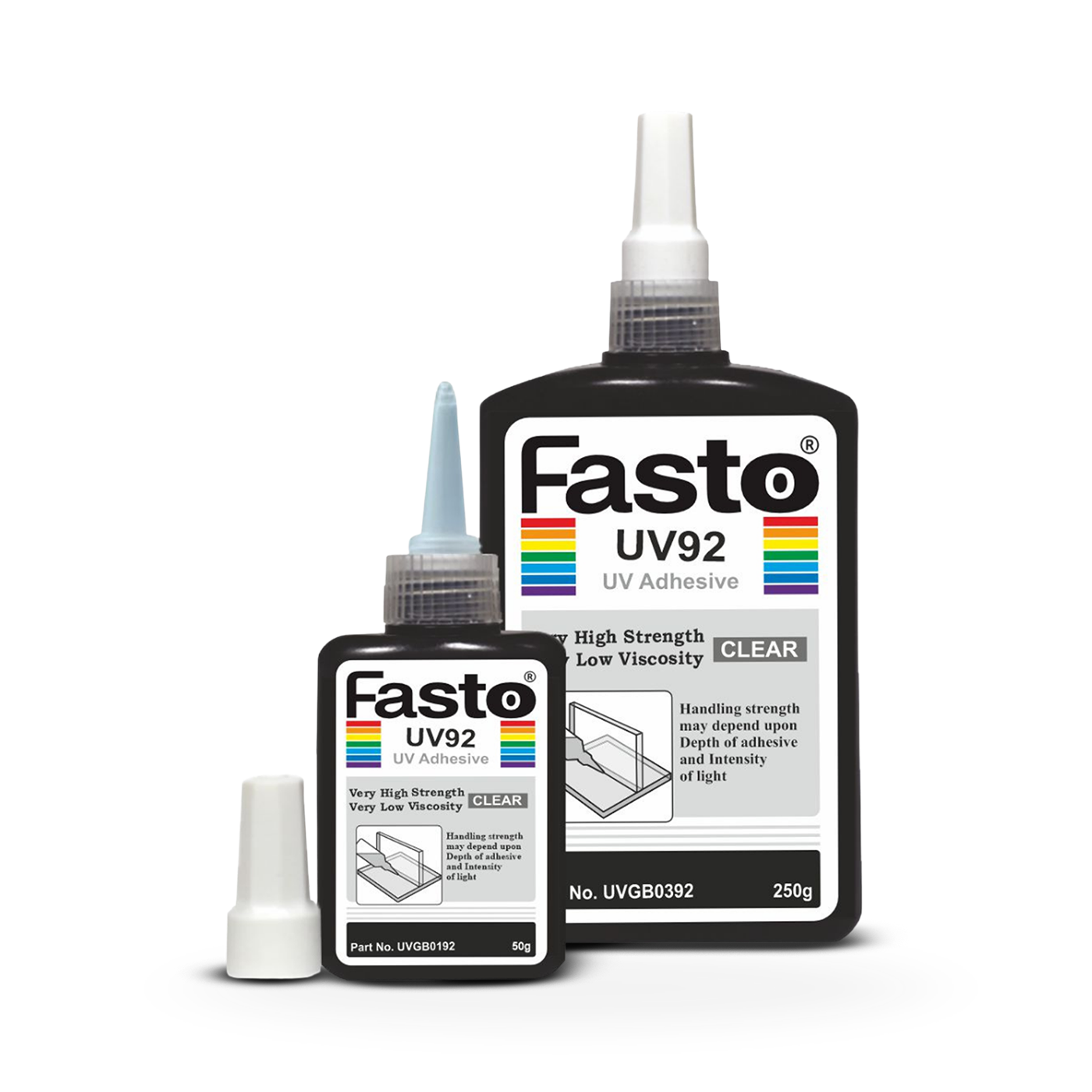
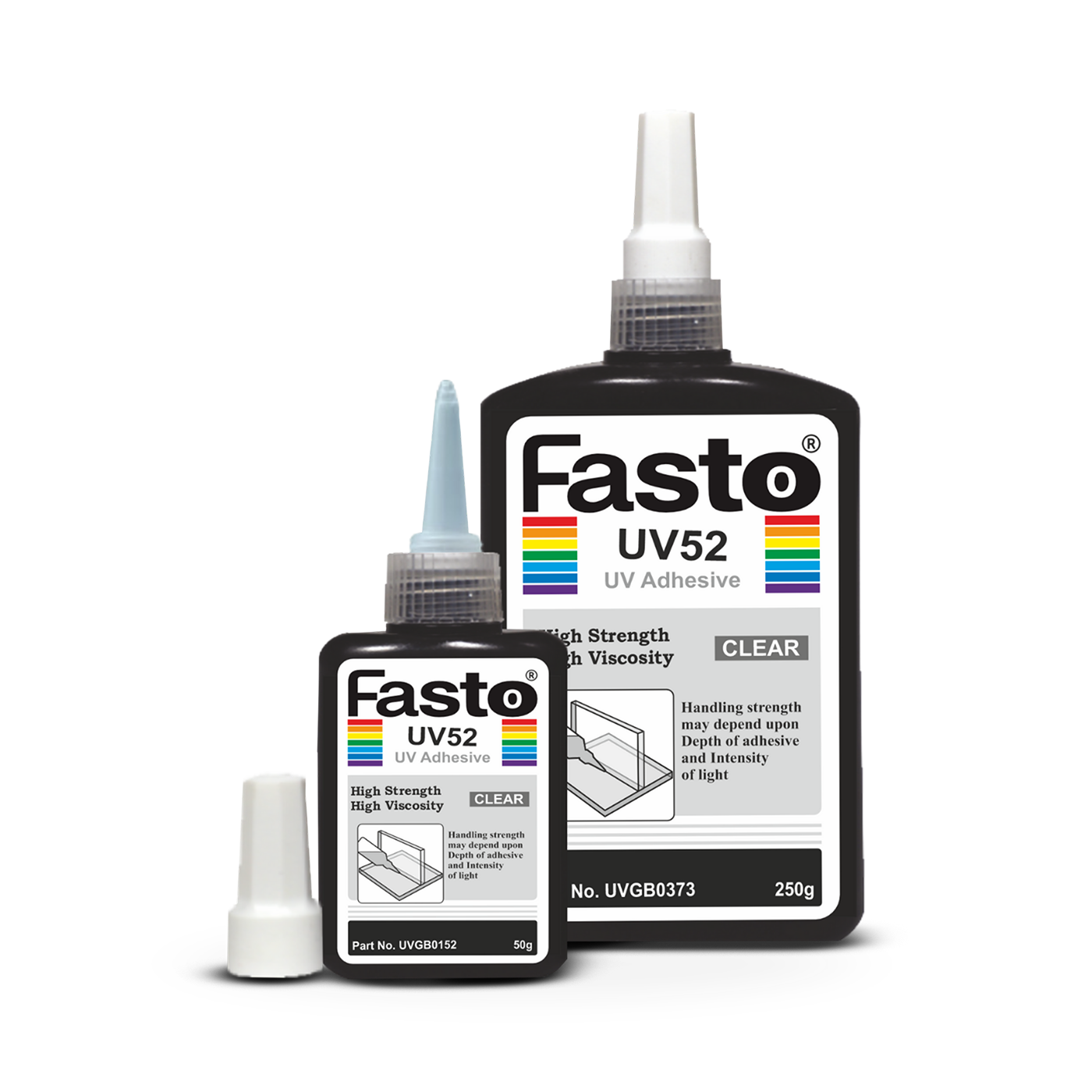
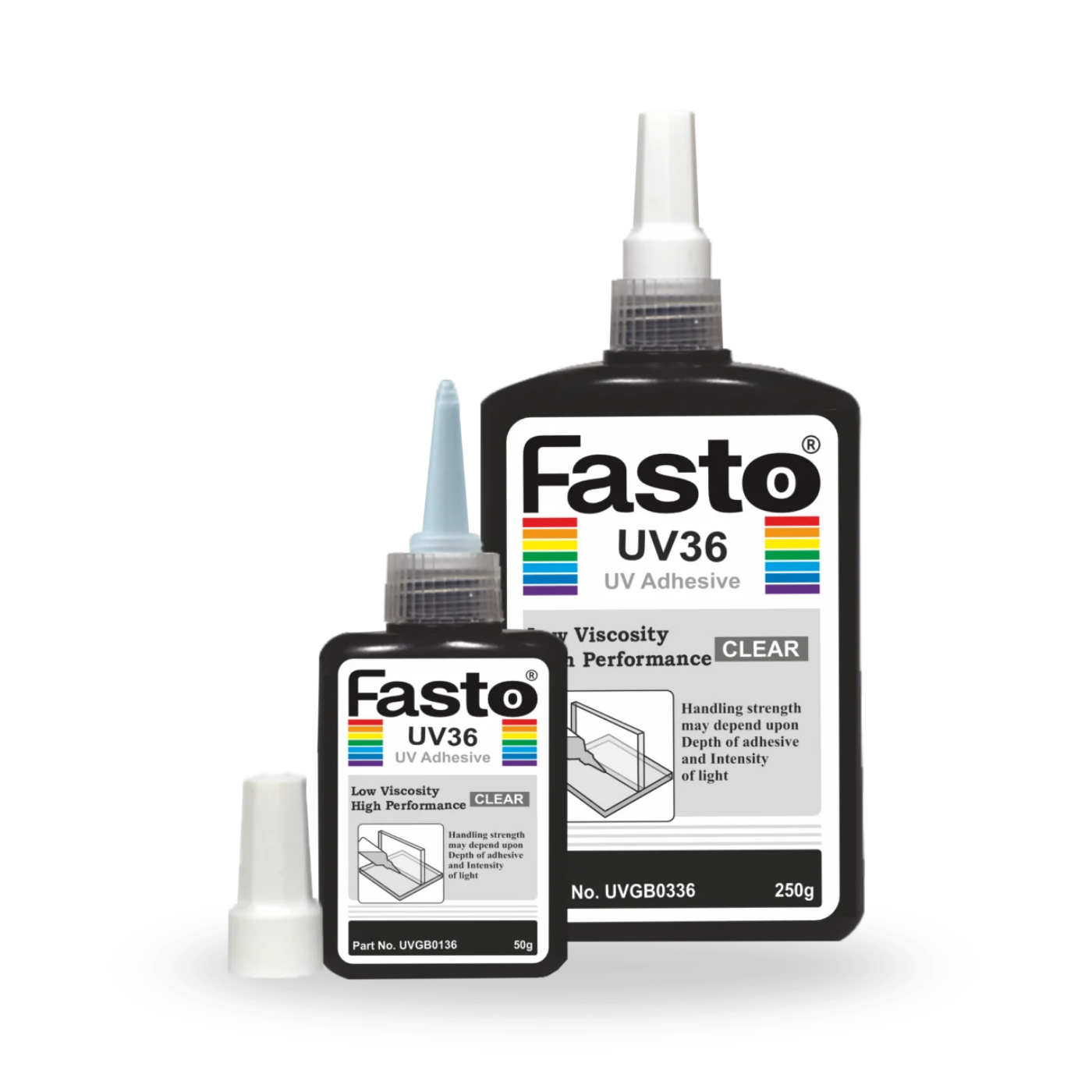
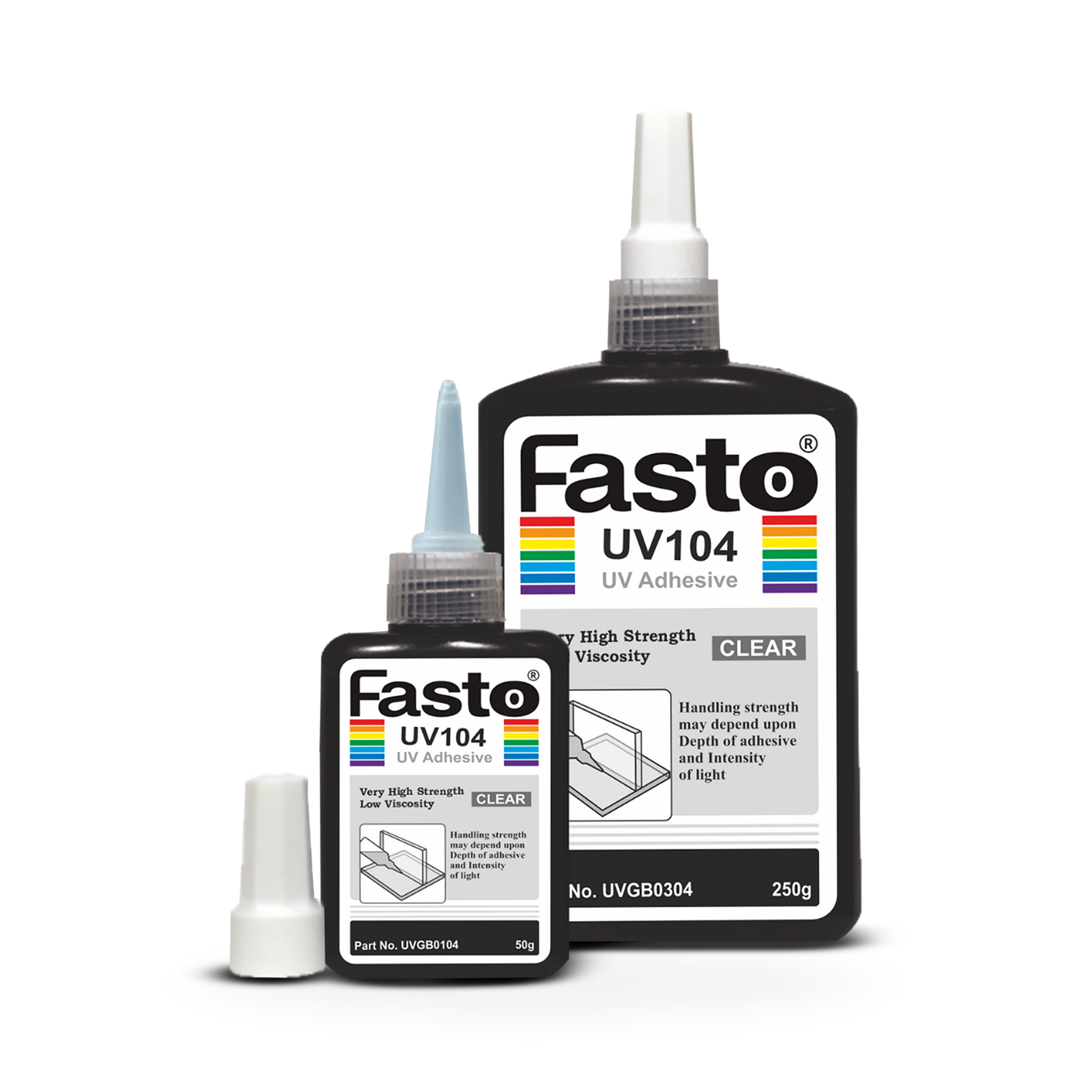
UV Adhesives for Precision Bonding, Glass Assembly &
Industrial Manufacturing
Fasto UV Adhesives are high-performance light-curing adhesives designed for rapid bonding, sealing, and assembly applications across multiple industries. Also known as UV glue, ultraviolet adhesive, or UV light adhesive, these advanced formulations cure quickly upon exposure to ultraviolet light, providing strong, transparent, and durable bonds.
UV adhesives are widely used for glass bonding, electronics assembly, LED manufacturing, appliance production, automotive components, industrial machinery, and precision engineering applications where fast curing, optical clarity, and high bond strength are essential.
Whether you require UV adhesive for glass, ultraviolet glue for transparent assemblies, or industrial UV adhesive solutions for high-speed manufacturing, Fasto offers reliable products engineered for consistent performance.
What Are UV Adhesives?
UV adhesives are single-component adhesives that remain liquid until exposed to ultraviolet light. Upon UV exposure, the adhesive rapidly cures to form a strong and durable bond without the need for heat or mixing.
These adhesives are particularly suitable for transparent substrates such as glass, acrylic, and certain plastics where UV light can penetrate and activate the curing process.
Fasto UV Adhesives offer:
- Rapid curing under UV light
- Excellent optical clarity
- High bond strength
- Clean and precise application
- Strong adhesion to glass, plastics, and metals
- Solvent-free formulations
- Improved production efficiency
Industries Where UV Adhesives Can be Use
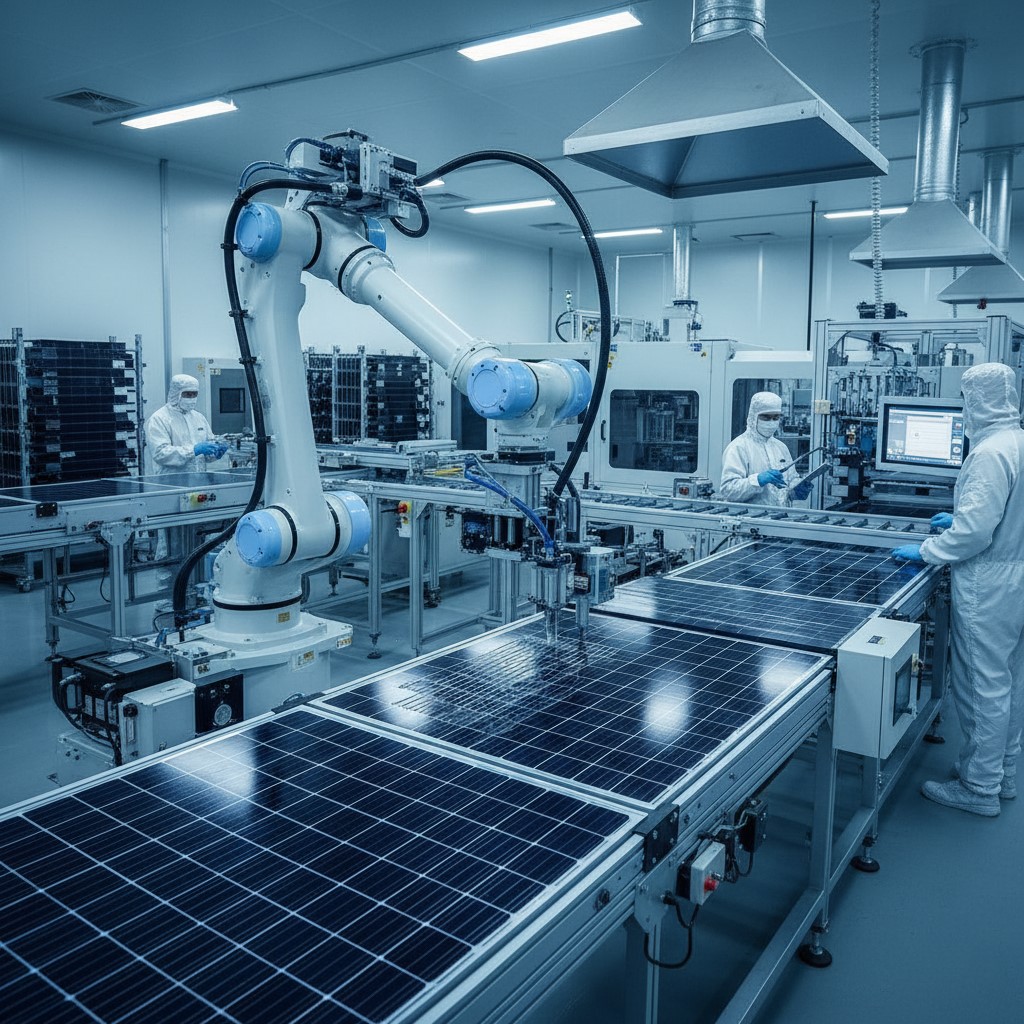
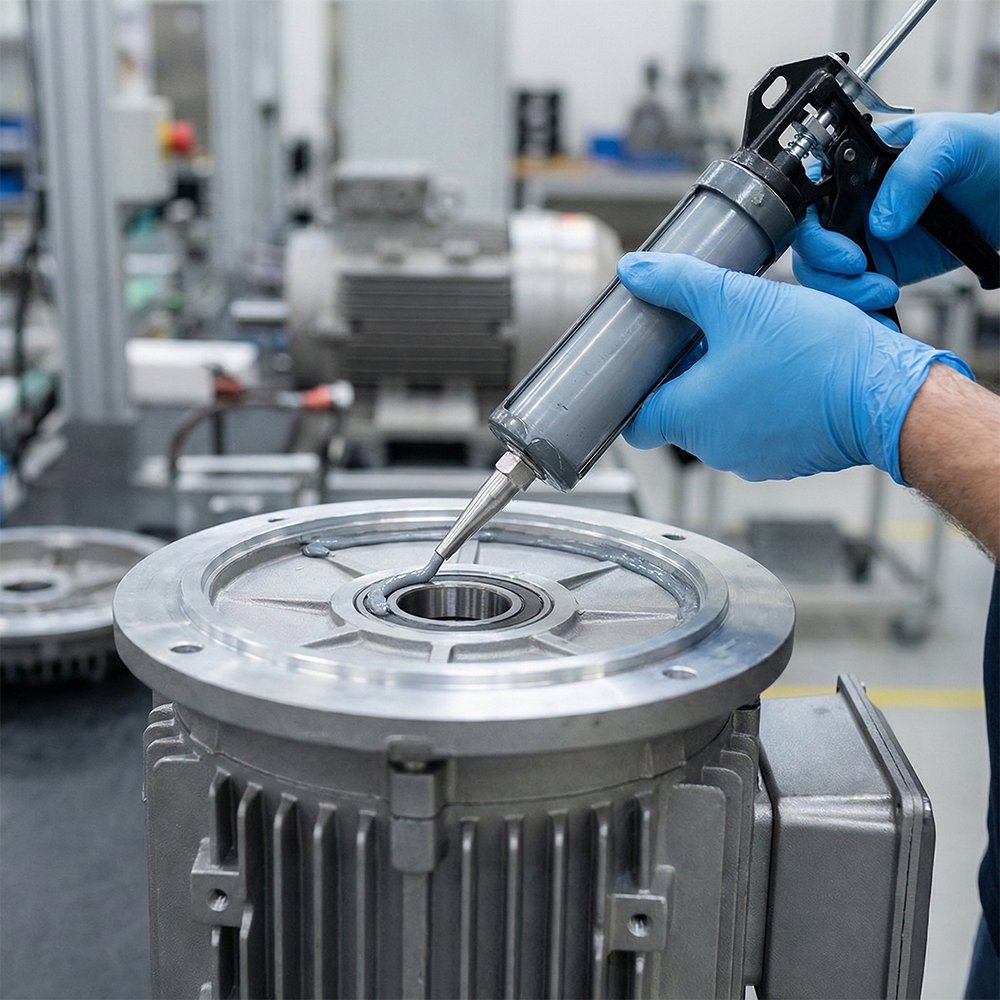
UV adhesives are used in solar manufacturing applications requiring transparent bonding and precision assembly.
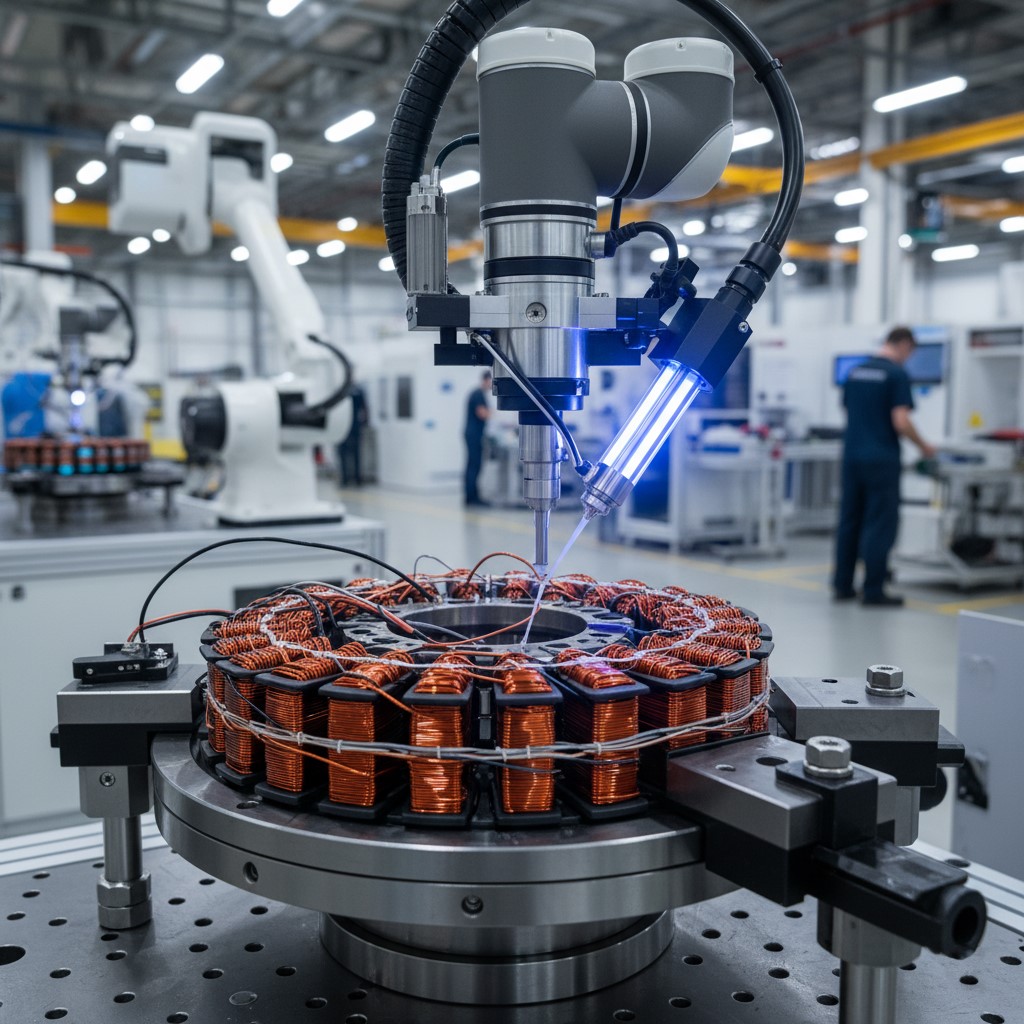
Industrial manufacturers use UV adhesives for high-speed assembly operations and transparent component bonding.
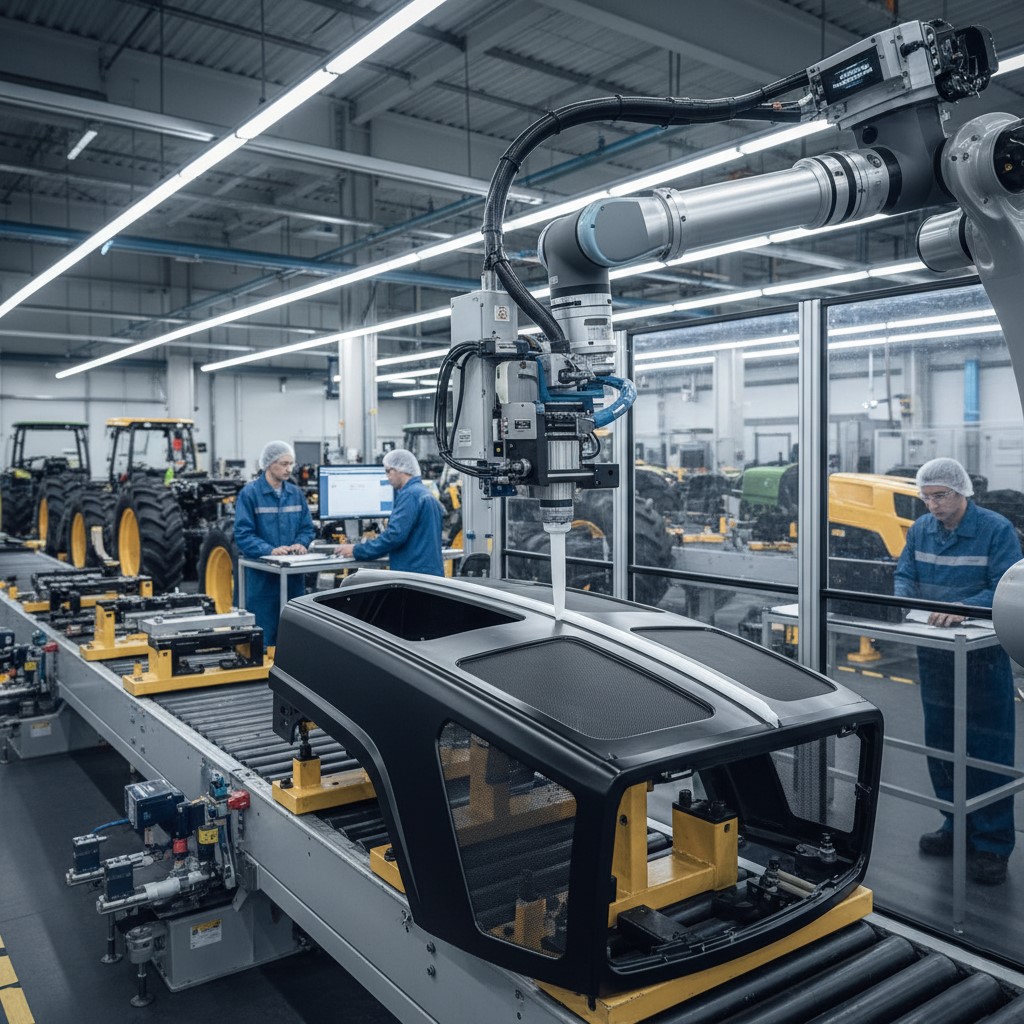
Transportation systems increasingly utilize UV bonding solutions for sensors, displays, and transparent assemblies.
UV adhesives support assembly of electronic, display, and instrumentation components used in agricultural equipment.
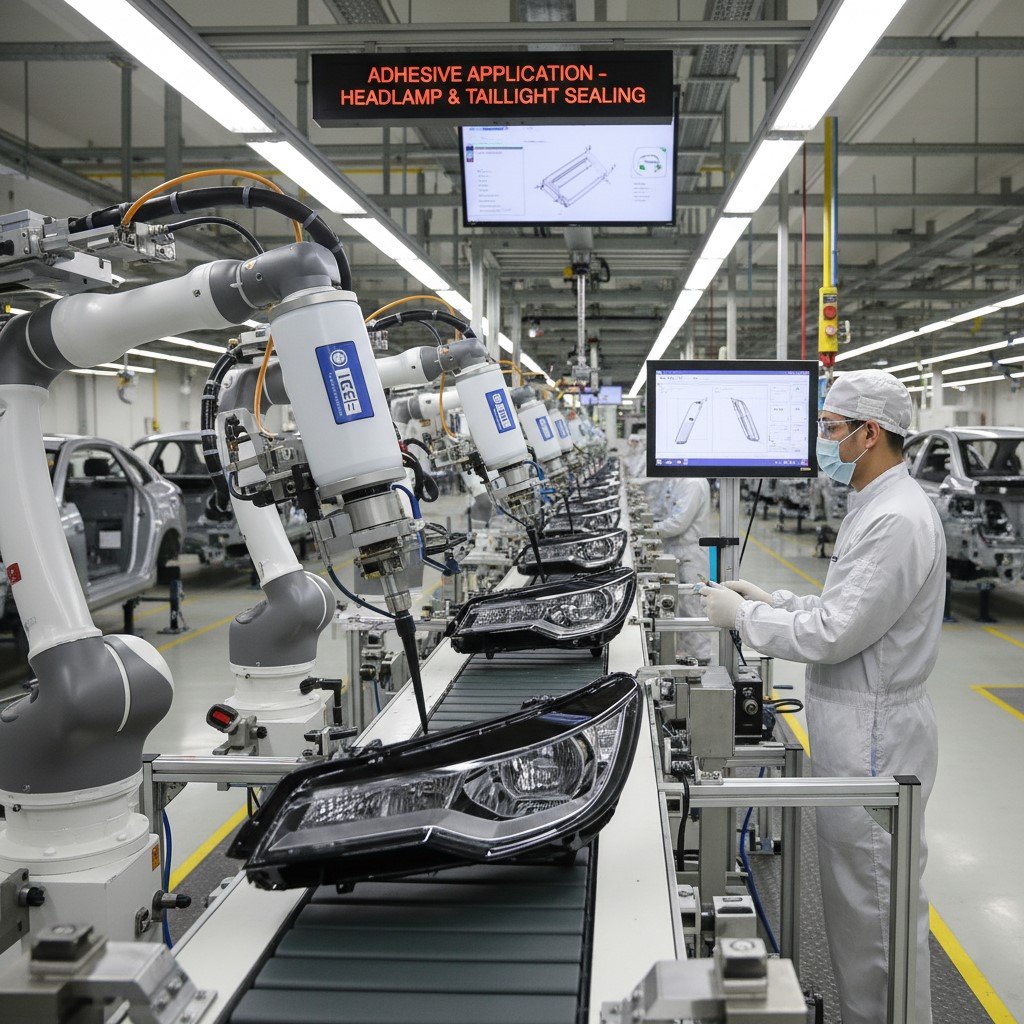
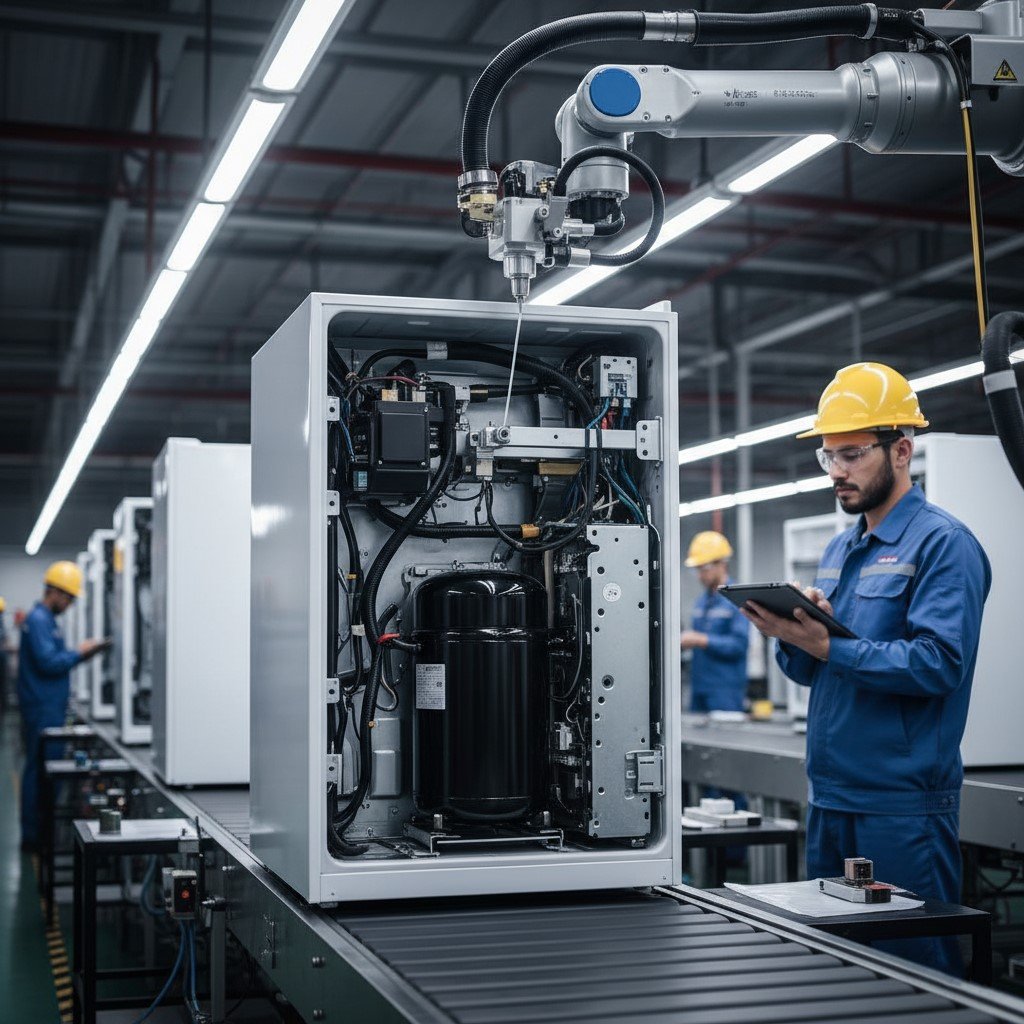
UV adhesives are widely used for precision assembly applications requiring fast curing and high transparency.
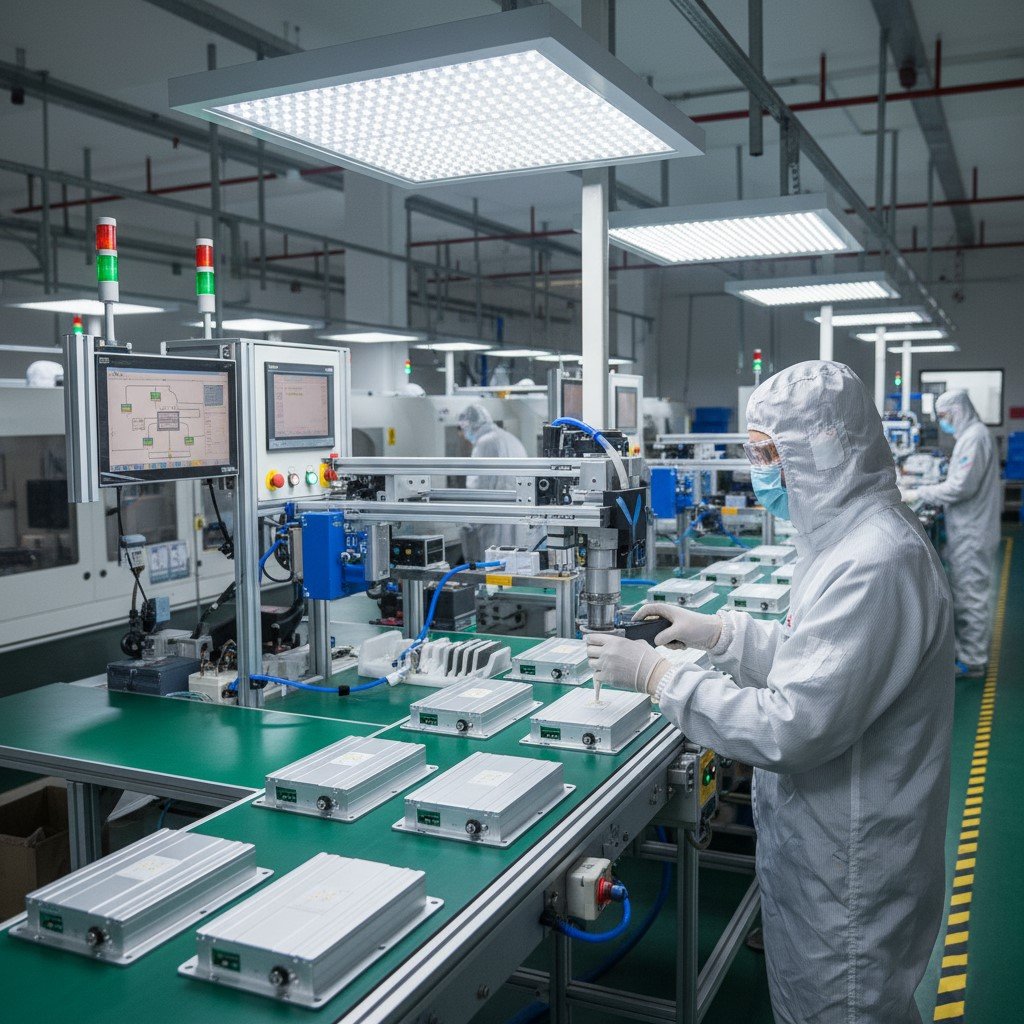
UV adhesives play a critical role in modern LED manufacturing and optical assembly applications.
Appliance manufacturers use UV adhesives for transparent assemblies and precision bonding operations.
Industries Where UV Adhesives Can be Use
UV adhesives are used in solar manufacturing applications requiring transparent bonding and precision assembly.
Industrial manufacturers use UV adhesives for high-speed assembly operations and transparent component bonding.
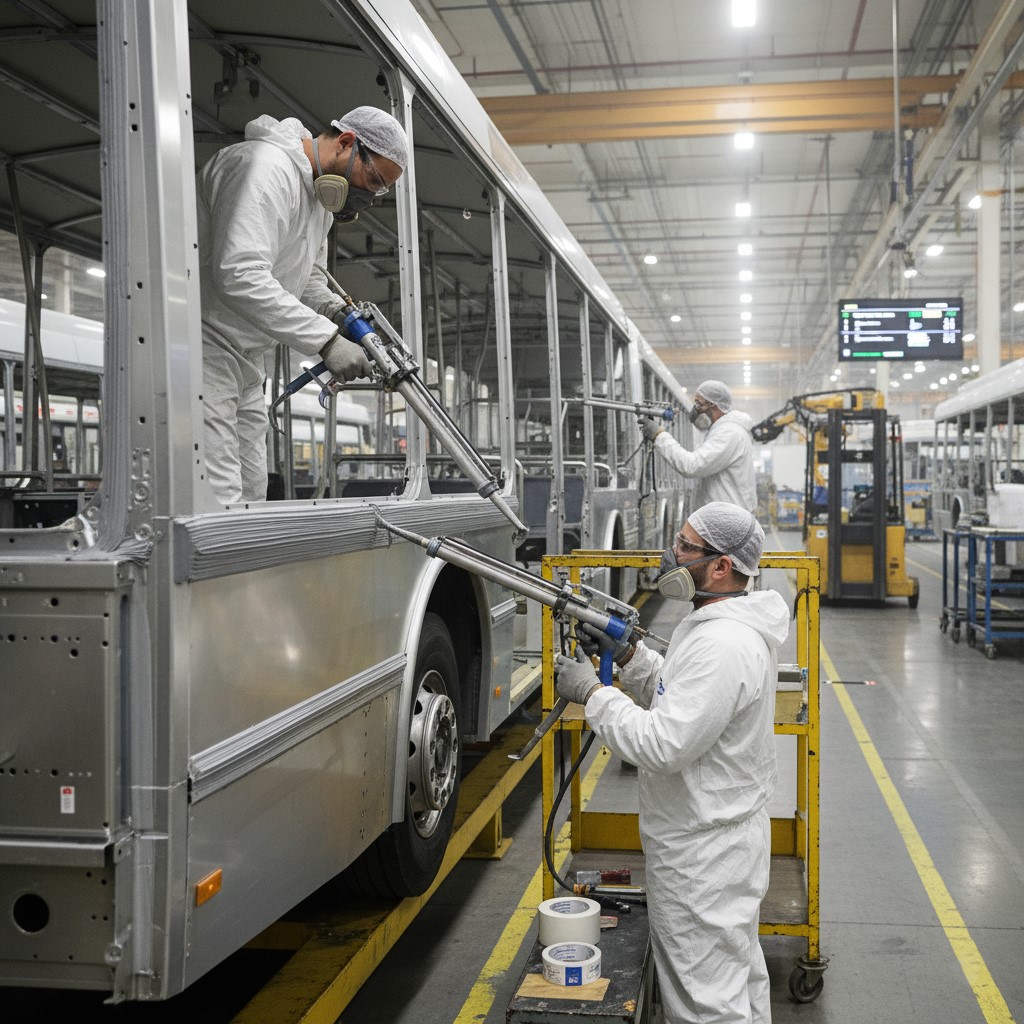
Transportation systems increasingly utilize UV bonding solutions for sensors, displays, and transparent assemblies.
UV adhesives support assembly of electronic, display, and instrumentation components used in agricultural equipment.
Appliance manufacturers use UV adhesives for transparent assemblies and precision bonding operations.
UV adhesives are widely used for precision assembly applications requiring fast curing and high transparency.
UV adhesives play a critical role in modern LED manufacturing and optical assembly applications.
Key Features & Benefits
Fast UV Curing
Rapid curing upon UV exposure significantly reduces assembly and production times.
Crystal Clear Bond Line
Provides transparent bonding without affecting the appearance of glass or clear components.
High Bond Strength
Creates durable bonds capable of withstanding operational stresses and environmental conditions.
One-Component System
Ready-to-use formulation eliminates mixing and simplifies manufacturing processes.
Precision Application
Ideal for intricate assemblies requiring controlled adhesive placement.
Increased Productivity
Supports high-speed manufacturing by reducing fixture and handling times.
UV Adhesive Solutions
UV Adhesive for Glass
Designed for transparent and aesthetically demanding glass bonding applications.
UV Glue for Glass-to-Glass Bonding
Provides strong, invisible bonds for decorative and structural glass assemblies.
Ultraviolet Adhesive for Plastics
Suitable for bonding clear plastics and transparent engineering materials.
UV Light Adhesive for Electronics
Engineered for precision assembly of electronic and LED components.
Industrial UV Adhesive
Developed for demanding industrial manufacturing and automated production environments.
Why Choose Fasto UV Adhesives?
Fasto provides industrial-grade UV adhesive solutions trusted by manufacturers across Solar Energy, Industrial Machinery, Transportation, Agricultural Machinery, Automotive, LED Lighting, and Appliance industries.
Our UV adhesives are designed to deliver:
- Rapid UV curing performance
- Strong and reliable bonds
- Excellent optical clarity
- Consistent manufacturing quality
- Easy application and processing
- High production efficiency
- Technical application support
- OEM and bulk supply capabilities
FAQs
UV adhesives are light-curing adhesives that remain liquid until exposed to ultraviolet (UV) light. Once exposed to the appropriate UV wavelength, they cure rapidly to form a strong, durable bond. UV adhesives are widely used in electronics, glass bonding, medical devices, automotive components, and precision manufacturing.
UV adhesives cure through a photochemical reaction. When exposed to UV light, special photo initiators within the adhesive activate and rapidly harden the material, creating a strong and reliable bond.
UV adhesives are commonly used for:
- Glass bonding
- Plastic bonding
- Metal assembly
- Electronics manufacturing
- Medical device assembly
- Optical component bonding
- LED lighting production
- Decorative and display applications
UV adhesives offer several benefits, including:
- Fast curing within seconds
- High bond strength
- Excellent optical clarity
- Precise application control
- Reduced manufacturing time
- Low shrinkage after curing
- Strong resistance to environmental conditions
Yes. UV adhesives are widely used for glass-to-glass and glass-to-metal bonding applications. Their optical clarity and strong adhesion make them ideal for architectural glass, furniture, display cases, and decorative assemblies.
Yes. UV adhesives can bond many transparent and translucent plastics, including acrylic, polycarbonate, PET, and certain engineering plastics. Material compatibility should always be verified for specific applications.
Yes. UV adhesives are commonly used in electronics manufacturing for component assembly, display bonding, sensor fixing, camera module assembly, and LED device production due to their fast curing and precision application.
UV adhesives are widely used in:
- Electronics Manufacturing
- Medical Devices
- Automotive Components
- LED Lighting
- Optical Devices
- Glass Processing
- Consumer Products
- Industrial Assembly
No. UV adhesives typically cure at room temperature and require only exposure to UV light. This makes them suitable for heat-sensitive components and delicate assemblies.
UV adhesives cure rapidly when exposed to UV light, allowing immediate handling and faster production. Epoxy adhesives generally require mixing and longer curing times but may offer superior performance in certain structural applications.
Yes. Many UV adhesives cure to a clear, transparent finish, making them ideal for optical, decorative, display, and glass bonding applications where appearance is important.
Yes. Optical-grade UV adhesives are designed for applications requiring high transparency, low haze, and excellent light transmission, such as lenses, displays, optical instruments, and LED assemblies.
Depending on the formulation, UV adhesives can bond:
- Glass
- Acrylic
- Polycarbonate
- Metals
- Ceramics
- Transparent plastics
- Optical components
Proper substrate compatibility should always be confirmed before application.
Many industrial UV adhesives offer excellent resistance to moisture, humidity, cleaning agents, oils, and certain industrial chemicals, making them suitable for demanding operating environments.
Yes. Industrial-grade UV adhesives provide high bond strength while maintaining clarity, durability, and resistance to vibration and environmental exposure.
Several factors influence curing performance:
- UV light intensity
- Exposure time
- Adhesive thickness
- Distance from UV source
- Substrate transparency
- UV wavelength compatibility
Proper curing conditions ensure maximum bond strength.
Most UV adhesives require UV light to reach the adhesive layer. Therefore, at least one substrate typically needs to be transparent or translucent to allow UV light penetration. Special dual-cure formulations may be available for more complex assemblies.
Selection depends on:
- Substrate materials
- Required bond strength
- Optical clarity requirements
- Environmental exposure
- Production speed
- Gap size
- Chemical resistance requirements
Choosing the correct formulation helps ensure reliable long-term performance.
Yes. Fasto Adhesives offers UV-curing adhesive solutions designed for precision bonding, glass assembly, electronics manufacturing, optical applications, and industrial production environments.