

Railways
Adhesives & Sealants for Railway Manufacturing
- Bonding interior panels and selected railway assemblies
- Sealing electrical enclosures and cable entries
- Protecting assemblies against vibration, dust and moisture
- Supporting durable adhesive and sealant solutions for railway vehicles
Bonding, Sealing & Protection for Railway Applications
Railway vehicles use adhesives and sealants across manufacturing and maintenance operations to bond and seal different materials and assemblies.
Fasto's current Transportation documentation identifies structural bonding of interior panels and assemblies, electrical enclosure and cable-entry sealing, and protection against vibration, dust and moisture as railway applications.
The suitable product depends on the materials being joined, required bond or seal function, joint movement, environmental exposure and production process.
- Interior panel and assembly bonding
- Electrical enclosure sealing
- Cable entry protection
- Vibration and movement resistance
- Dust and moisture protection
- Durable industrial-grade assembly solutions
Critical Adhesive & Sealant Applications in Railways
Fasto's documented railway applications focus on interior assembly bonding, electrical sealing and environmental protection.
Interior Panel Bonding
Adhesive solutions can be evaluated for bonding suitable railway interior panels and assemblies where reliable joining is required.
- Interior panels
- Interior assemblies
- Vehicle trim interfaces
- Panel-to-structure bonding
Railway Assembly Bonding
Suitable hybrid or silicone adhesive technologies can support selected assembly interfaces in railway vehicles.
- Assembly interfaces
- Vehicle equipment
- Mixed-material assemblies
- Transportation equipment
Electrical Enclosure Sealing
Sealants can be evaluated for electrical equipment enclosures where environmental protection against moisture and dust is required.
- Electrical enclosures
- Equipment housings
- Control equipment
- Environmental sealing
Cable Entry Sealing
Suitable sealants can help protect cable-entry interfaces against environmental exposure when correctly designed and applied.
- Cable entries
- Electrical interfaces
- Equipment penetrations
- Moisture protection
Vibration, Dust & Moisture Protection
Railway equipment experiences vibration and environmental exposure, making appropriate sealing and flexible bonding important for selected assemblies.
- Vibration exposure
- Dust protection
- Moisture protection
- Environmental sealing
Railway Equipment Maintenance
Industrial adhesive and sealant technologies can support suitable railway equipment maintenance and re-sealing operations.
- Equipment maintenance
- Panel re-bonding
- Enclosure re-sealing
- Transportation equipment repair
Fasto Solutions for Railway Applications
Fasto's current Transportation page recommends MS50, S860 and S950 for railway applications.
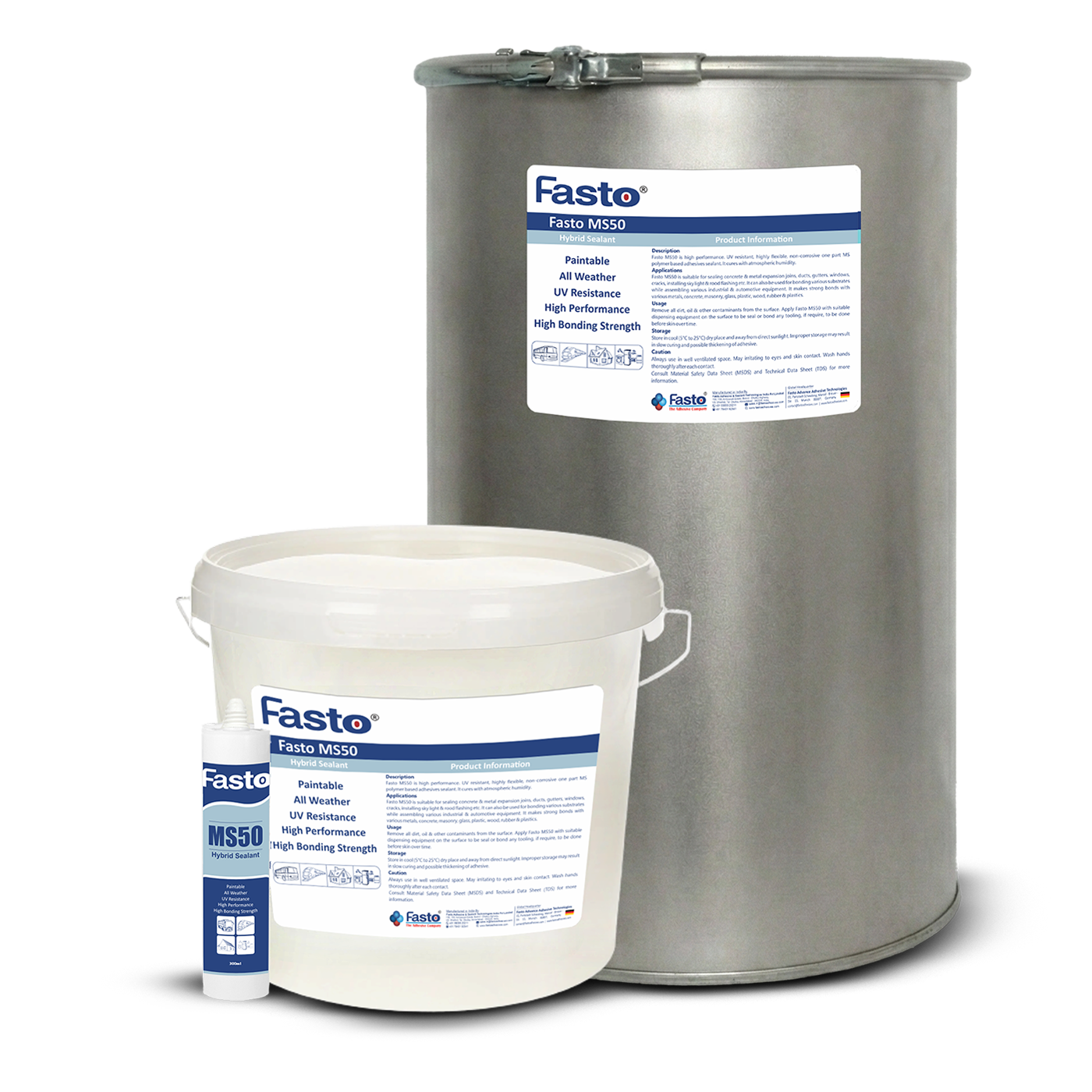
Fasto MS50
Fasto MS50 is identified for transportation body bonding and lists Railway Coach Interiors among its documented applications.
View Product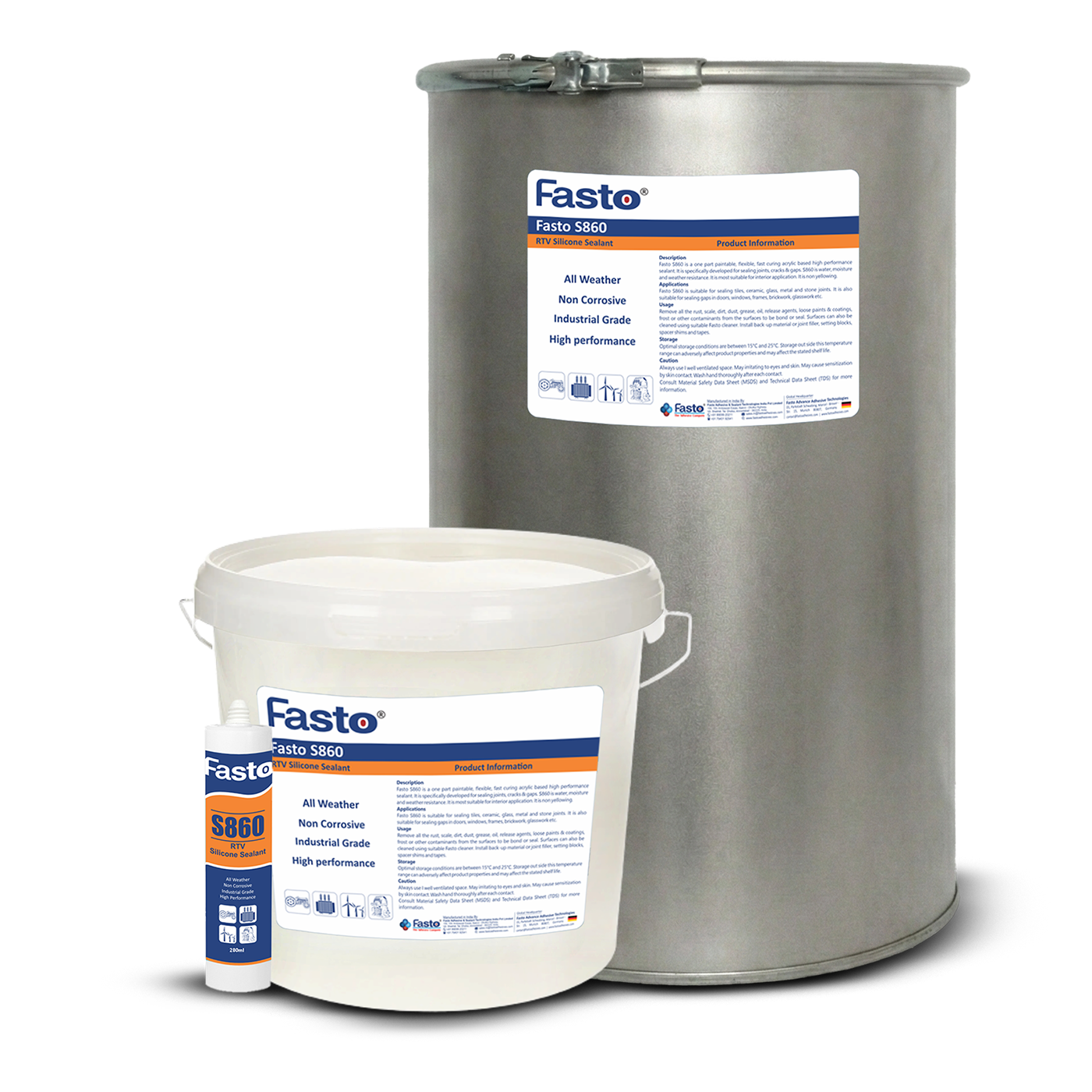
Fasto S860
One-part neutral-cure RTV silicone sealant for industrial and transportation applications where flexible environmental sealing is required.
View Product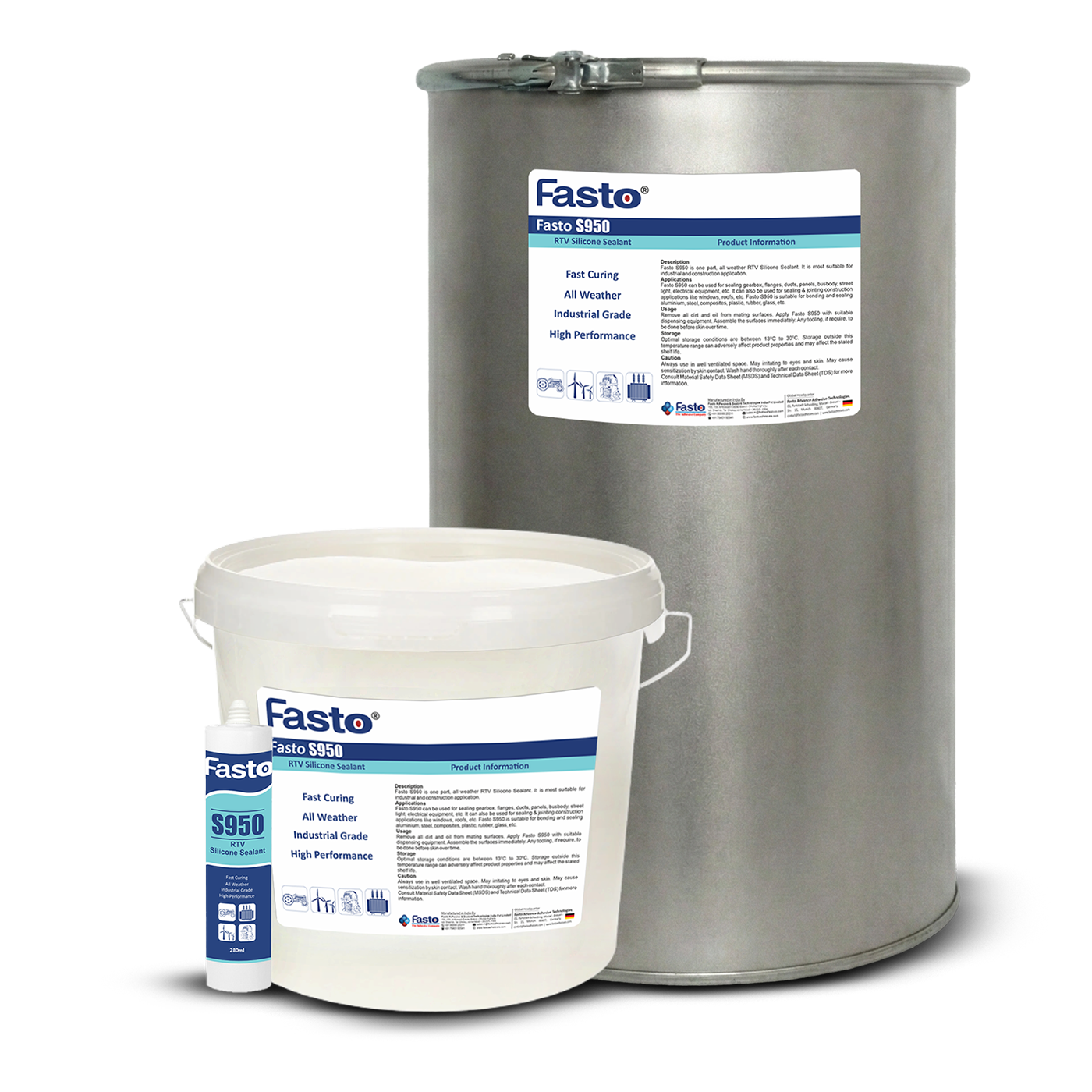
Fasto S950
Industrial RTV sealant for transportation applications requiring durable sealing and environmental protection.
View ProductRailway Application to Fasto Product Mapping
Initial mapping follows Fasto's current Transportation documentation. Final selection should be validated against the actual railway assembly.
| Railway Application | Primary Function | Fasto Product |
|---|---|---|
| Rail Coach Interiors | Interior panel and assembly bonding | MS50 |
| Interior Assemblies | Bonding and sealing selected assemblies | MS50 |
| Electrical Enclosures | Environmental sealing | S860 |
| Cable Entries | Moisture and dust protection | S860 |
| Railway Equipment | Durable environmental sealing | S950 |
| Maintenance Assemblies | Sealing and equipment protection | S950 |
What Matters in Railway Adhesive & Sealant Selection?
Vibration Resistance
Railway vehicles operate under continuous vibration and dynamic movement, so suitable bonding and sealing systems must be selected accordingly.
Moisture Protection
Electrical enclosures, cable entries and other interfaces may require durable sealing against moisture and environmental exposure.
Dust Protection
Appropriate enclosure and joint sealing can help limit environmental contaminants entering protected equipment.
Material Compatibility
Railway assemblies may contain metals, composites, plastics and other materials, making substrate compatibility important during selection.
How to Select the Right Railway Adhesive or Sealant
The correct product should be selected according to the actual railway component, substrate, joint design and operating environment.
01. Substrate
- Metal surfaces
- Composite panels
- Plastics and engineered materials
- Painted or coated surfaces
02. Application Type
- Interior panel bonding
- Assembly bonding
- Electrical enclosure sealing
- Cable entry sealing
03. Environmental Exposure
- Moisture
- Dust
- Outdoor weathering
- Temperature changes
04. Mechanical Conditions
- Vibration
- Dynamic movement
- Shock loading
- Joint movement
05. Electrical Protection
- Equipment enclosure sealing
- Cable entry protection
- Moisture exclusion
- Dust exclusion
06. Manufacturing Process
- Surface preparation
- Manual or automated dispensing
- Assembly sequence
- Skin and cure requirements
Applying Adhesives & Sealants in Railway Manufacturing
The exact process depends on the selected product, substrate, joint geometry and manufacturing requirement.
Surface Preparation
Clean and prepare the bonding or sealing surfaces according to the selected product's application requirements.
Dispensing
Apply the selected adhesive or sealant in a controlled bead or layer to the prepared interface.
Assembly
Position the panel, enclosure or component within the applicable working window and maintain the required assembly alignment.
Tooling & Cure
Tool visible sealant joints where required and allow the product to cure under the specified environmental conditions.