

Washing Machines
Adhesives & Sealants in Washing Machines
- Sealing of tubs, pumps, and hose connections
- Bonding of housings, brackets, and panels
- Vibration and noise reduction (NVH applications)
- Protection against water, detergents, and humidity
Bonding, Sealing & Protection for Washing Machine Assemblies
Washing machines use adhesives and sealants for water sealing, shock absorption and panel assembly. These materials support durability, safety and noise control during machine operation.
Fasto's appliance application information identifies tub, pump and hose sealing, housing and panel bonding, vibration and noise reduction, and protection against water, detergents and humidity as key washing machine requirements.
The appropriate adhesive or sealant should be selected according to the component, substrate, joint design, environmental exposure, vibration conditions and production process.
- Tub, pump and hose connection sealing
- Housing, bracket and panel bonding
- Vibration and noise reduction
- Water and humidity protection
- Detergent and chemical exposure resistance
- Reliable multi-material assembly
Critical Adhesive & Sealant Applications in Washing Machines
Fasto solutions can support the major bonding, sealing and protection requirements found across washing machine assemblies.
Tub, Pump & Hose Connection Sealing
Sealing materials help protect water-carrying interfaces and connections against leakage and environmental exposure.
- Washing machine tubs
- Pump connections
- Hose interfaces
- Water ingress protection
Housing & Panel Bonding
Adhesives can support the assembly of housings, panels and selected appliance components where reliable bonding is required.
- Machine housings
- Metal panels
- Plastic housings
- Panel assembly
Bracket & Component Bonding
Fast-curing adhesives can support rapid positioning and bonding of suitable brackets and smaller appliance components.
- Mounting brackets
- Small components
- Plastic parts
- Metal components
Vibration & Noise Reduction
Adhesive and sealant solutions can support assembly integrity where washing machine components experience vibration and dynamic movement.
- Vibration-prone assemblies
- Dynamic component joints
- Noise reduction support
- NVH applications
Water, Detergent & Humidity Protection
Proper sealing helps protect selected appliance interfaces from water, humidity, detergents and everyday operating exposure.
- Water exposure
- Humidity
- Detergent exposure
- Environmental protection
Multi-Material Appliance Assembly
Washing machine assemblies can combine metals, plastics, rubber and engineered materials requiring compatible adhesive and sealant technologies.
- Metal-to-metal assembly
- Plastic components
- Rubber interfaces
- Mixed-material assemblies
Fasto Solutions for Washing Machine Applications
Fasto's current Appliances page recommends CA15, S887 and SA26 for Washing Machine applications.

Fasto CA15
A high-viscosity, high-strength instant adhesive suited to bonding applications where gap filling, controlled flow and reliable adhesion to suitable plastics, rubber, composites and metal components are required.
View Product
Fasto S887
A one-part neutral-cure RTV silicone sealant designed for durable sealing and bonding, with flexibility and resistance to moisture, environmental exposure and joint movement.
View Product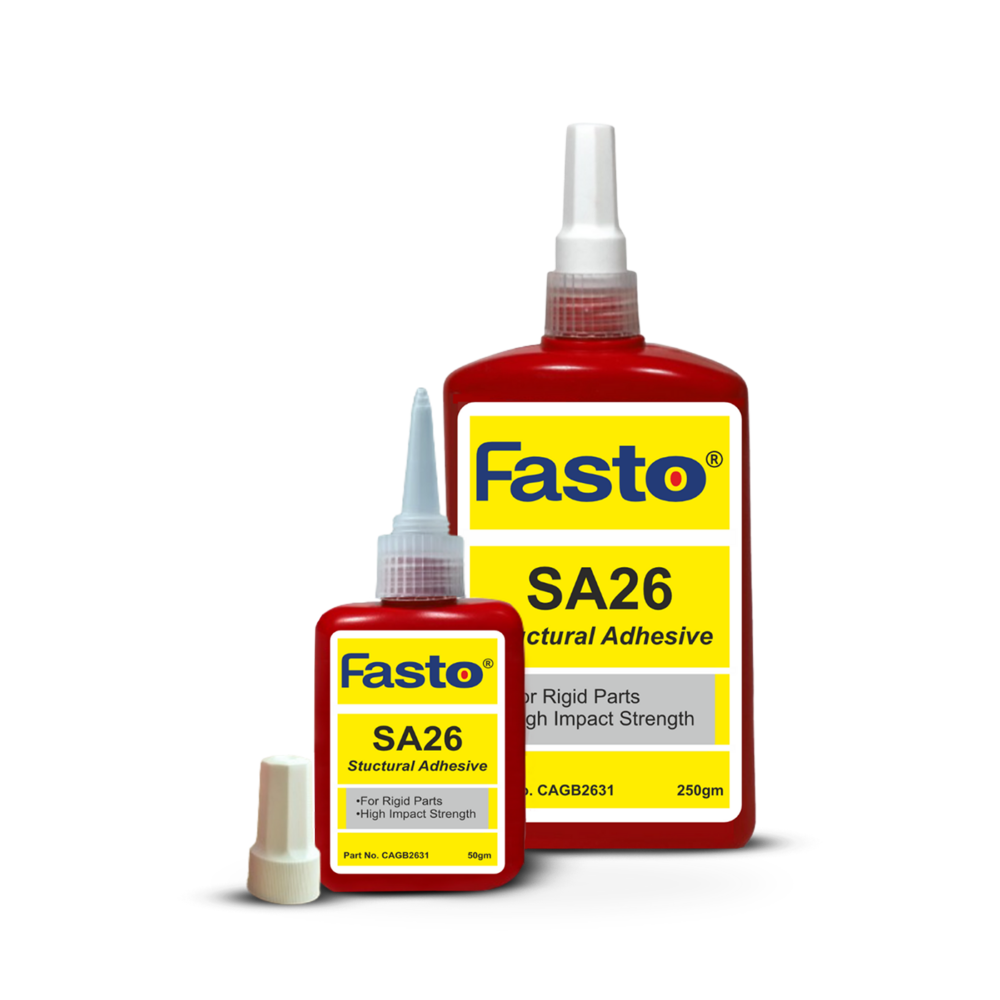
Fasto SA26
A high-viscosity structural adhesive designed for rigid component bonding where high impact strength, durability, vibration resistance and reliable metal bonding are required.
View ProductWashing Machine Application to Fasto Product Mapping
Initial product mapping follows Fasto's current Washing Machine recommendation and the documented characteristics of the selected products. Final selection should be validated against the actual substrate, joint geometry and operating conditions.
| Washing Machine Application | Primary Function | Fasto Product |
|---|---|---|
| Tub, Pump & Hose Connections | Water-resistant sealing and environmental protection | S887 |
| Housings & Panels | Rapid bonding of suitable appliance components | CA15 |
| Rigid Metal Components | High-strength structural bonding | SA26 |
| Vibration-Prone Joints | Flexible sealing and durable joint integrity | S887 |
| Small Components & Brackets | Fast positioning and component bonding | CA15 |
| Rigid Metal Assemblies | Impact-resistant structural bonding | SA26 |
What Matters in Washing Machine Adhesive & Sealant Selection?
Water & Humidity
Washing machine assemblies are regularly exposed to water and humidity, making reliable sealing important around suitable joints and interfaces.
Detergent Exposure
Selected components may encounter detergents and cleaning chemicals, so material compatibility should be evaluated for the actual operating environment.
Vibration & NVH
Washing machine components experience repeated vibration and dynamic movement, making joint integrity and vibration control important.
Substrate Compatibility
Product selection should account for the actual combination of metals, plastics, rubber and other appliance materials.
How to Select the Right Washing Machine Adhesive or Sealant
Selection should consider the component, substrate, operating environment, joint conditions and manufacturing process.
01. Component
- Tubs and water connections
- Pumps and hose interfaces
- Housings and panels
- Brackets and small components
02. Substrate
- Steel and metal components
- Plastics
- Rubber interfaces
- Mixed-material assemblies
03. Environment
- Water exposure
- Humidity
- Detergents
- Household operating conditions
04. Mechanical Conditions
- Vibration
- Shock and movement
- Dynamic loading
- Joint movement
05. Joint Requirements
- Water sealing
- Structural bonding
- Gap filling
- Flexible sealing
06. Production Process
- Surface preparation
- Dispensing method
- Assembly sequence
- Cure / fixture time
Applying Adhesives & Sealants in Washing Machine Manufacturing
The exact process depends on the selected product, component, substrate and joint design.
Surface Preparation
Clean bonding and sealing surfaces and remove oil, grease, dust, moisture and other contaminants according to the selected product requirements.
Controlled Application
Apply the selected adhesive or sealant in the defined bond line, sealing bead or joint area using the required dispensing method.
Assembly
Position and assemble the components within the required working or fixture window and maintain the specified alignment.
Cure & Validation
Allow the material to achieve the required handling or cure condition and validate sealing, bonding and assembly performance.