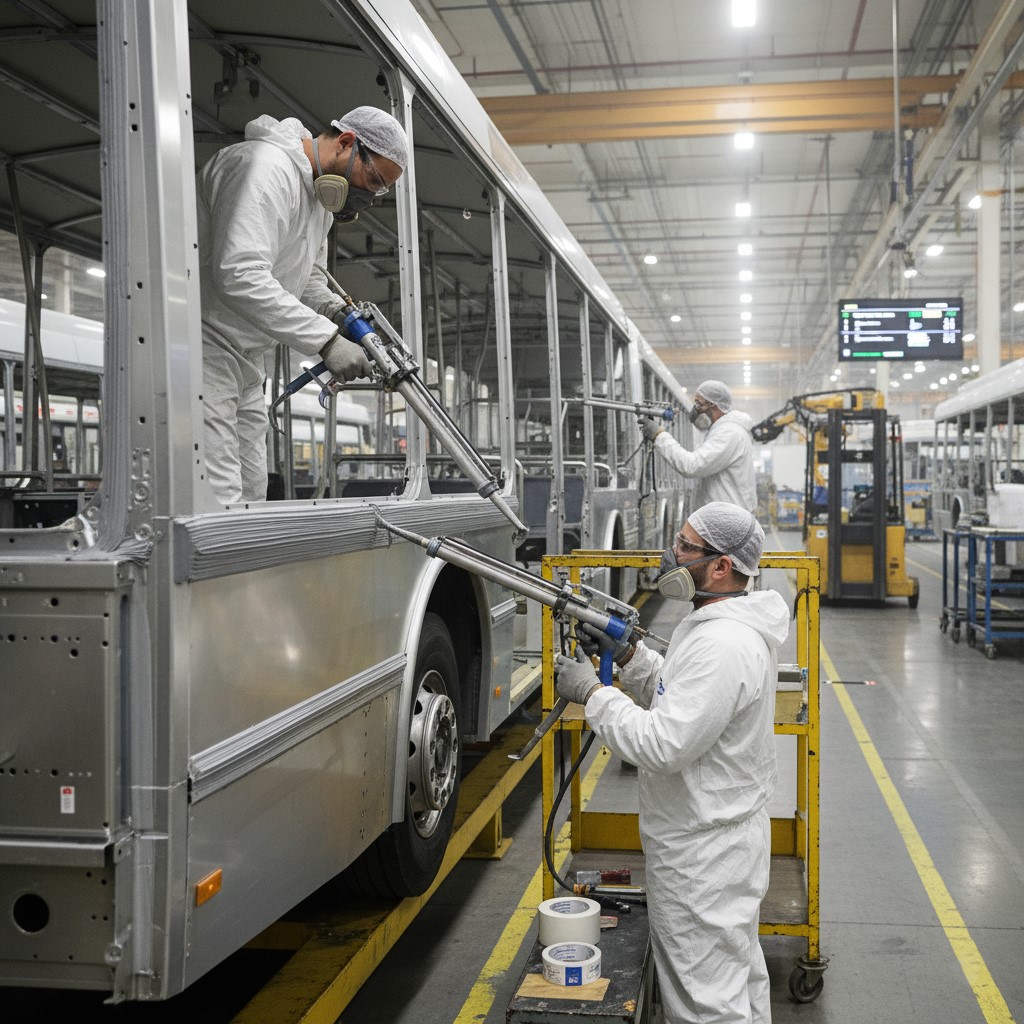
Bus
Adhesive and Sealant application in Bus
01. Body Structure Bonding:
Durability
Adhesives and sealants prevent corrosion, water ingress, and standing water, extending the lifespan of the bus.
Strength and Flexibility
They can bond dissimilar materials (like metal and plastic) together, creating a stronger, more flexible structure.
Impact Dampening
Some adhesives and sealants are designed to dampen impact, improving the bus's crash test performance.
02. Interior and Exterior Sealing
Water and Air Sealing
Sealants prevent water and air from entering the bus, improving comfort and safety for passengers.
Aesthetics
They can create a clean, seamless look by filling gaps and joints, eliminating the need for unsightly fasteners or welds.
Noise Reduction
Sealants can contribute to noise and vibration damping, enhancing the passenger experience.
03. Specific Applications
Floor and Panel Bonding
Adhesives are used to securely bond floors, side panels, and roof panels, creating a strong and durable structure.
Glass Assembly
Sealants are crucial for securing and sealing windows and other glass panels.
Front and Rear Masks
Adhesives and sealants ensure the proper fit and sealing of front and rear masks.
Luggage Doors and Hatches
Adhesives are used to bond luggage doors and hatches, while sealants ensure airtight seals.
Applications of Adhesives and Sealants in Railways
Exterior Panel Bonding
Adhesives are used to bond exterior panels, replacing mechanical fasteners and welded bonds for a stronger and lighter structure.
Sealing Joints and Gaps
Sealants are essential for sealing joints and gaps, preventing leaks and ensuring the airtightness of the train, especially in air-conditioned vehicles
Protection from Corrosion
Sealants help protect the structure and equipment from environmental factors like rain, sun, and abrasion, preventing corrosion and extending the lifespan of the vehicle.
Structural Bonding
Adhesives are used to bond various materials, including aluminum, plastics, and composites, in the construction of the train's structure.
Interior Applications
Adhesives and sealants are used to bond floor coverings, fix insulating materials, and attach interior panels.
Electronic Protection
Silicones are used to protect electronic control units, providing electrical insulation and bonding/sealing components in the train's electrical systems.
Weldbonding
Adhesives are used in conjunction with welding, a process called weldbonding, to create strong and durable bonds in aluminum body structures.
Acoustic and Aerodynamic Performance
Adhesives are used to smooth surfaces and reduce aerodynamic noise, improving both the passenger experience and the train's energy efficiency.
Railways
Elevators
Adhesive and Sealant Applications in Elevators
Structural Bonding
Strong, durable adhesives are used to bond structural elements like stiffeners, frames, and floor structures, ensuring a robust and reliable elevator.
Sealing Joints
Sealants are used to create watertight and airtight seals in elevator shafts, preventing water and air infiltration.
Vibration and Sound Dampening
Specific adhesives and sealants are used to dampen vibration and noise within the elevator cabin, ensuring a smooth and comfortable ride.
Component Fixation
Adhesives are used to fix various components like displays, mirrors, and interior panels to the elevator walls and ceiling.
Floor Covering Bonding
Adhesives are used to bond floor coverings to the elevator floor, ensuring a durable and aesthetically pleasing surface.
Motor Construction
Adhesives, particularly magnet bonders, are used in motor construction to enhance performance and reduce assembly time.
Traction Drives
Threadlockers, gasketing products, and other adhesive solutions are used in traction drives to ensure safe operation and longevity.
Automated Dispensing
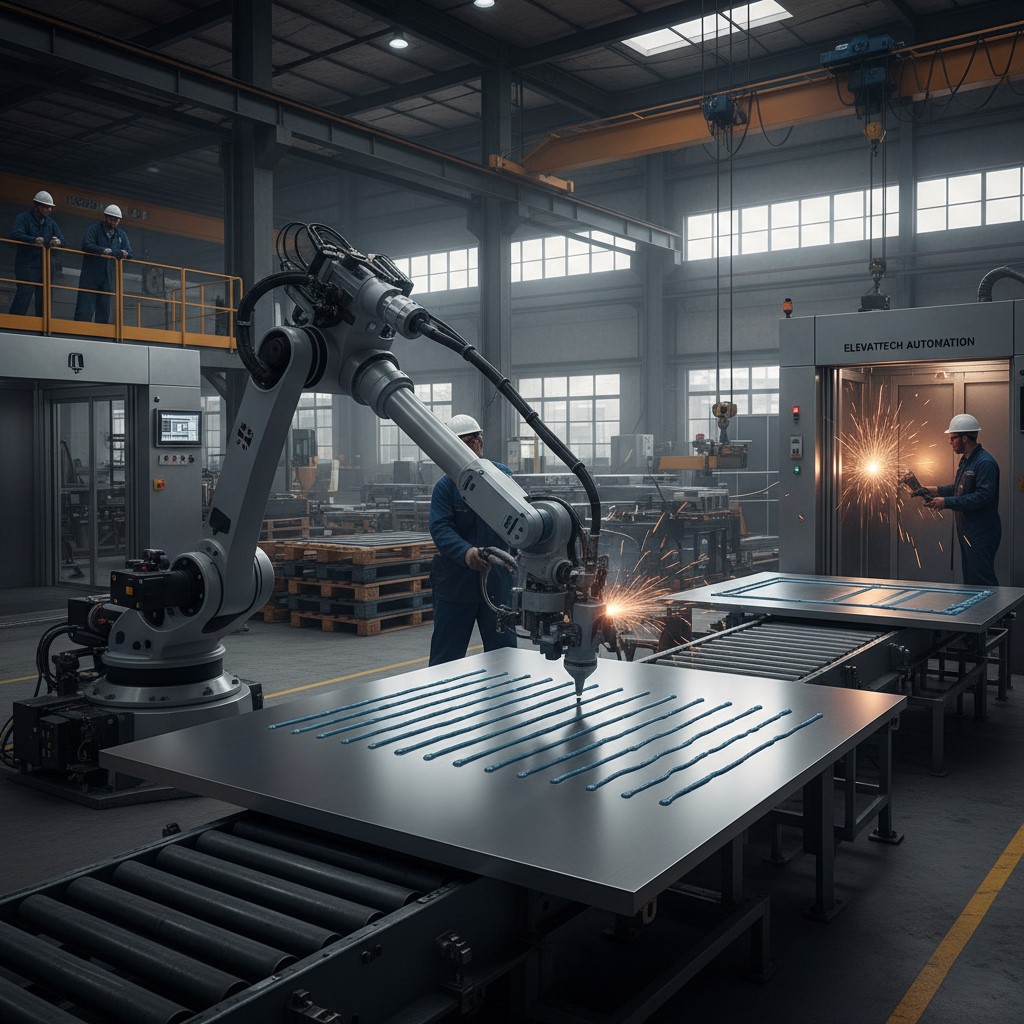
Automated adhesive dispensing systems are used in elevator manufacturing to ensure accurate and efficient application of adhesives and sealants.