
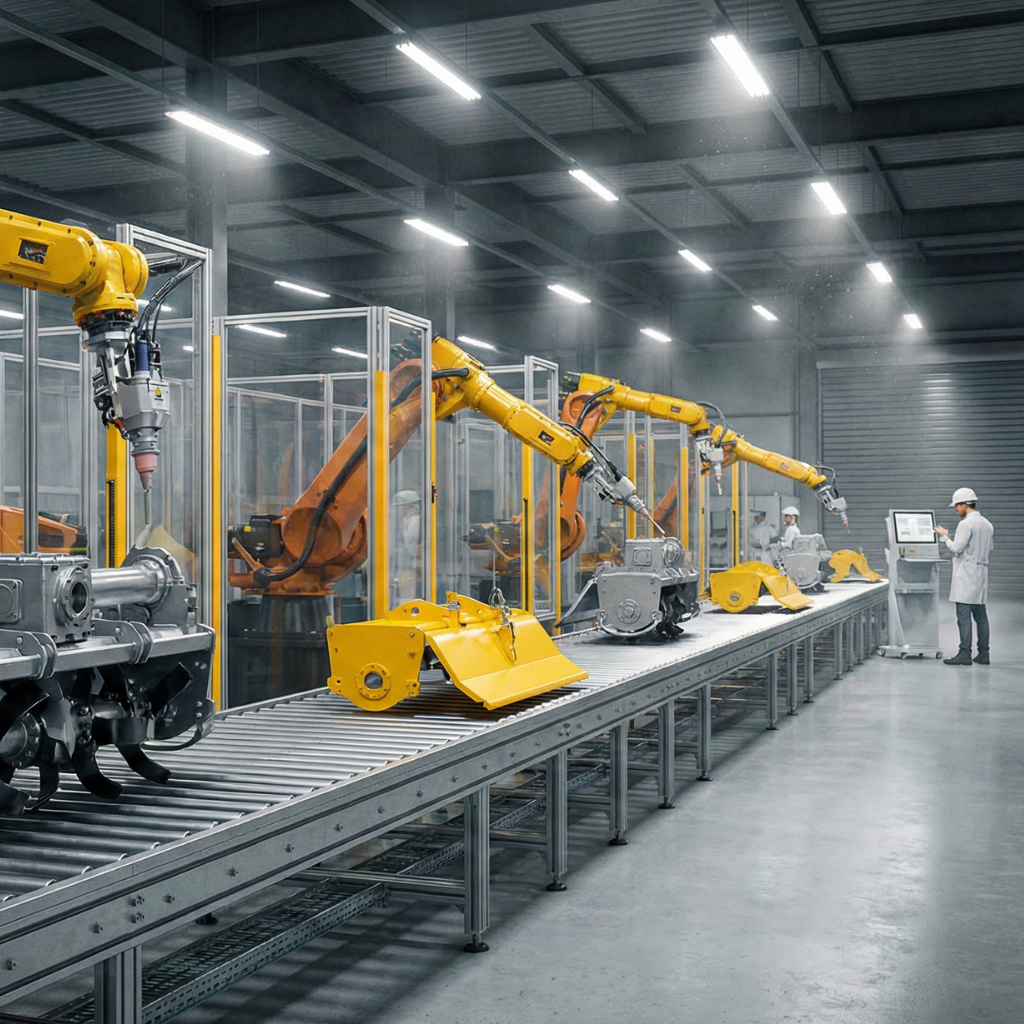
Rotavators
Adhesives & Sealants in Rotavators
- Sealing of gearbox housings, flanges, and mechanical joints
- Prevention of oil, grease, and fluid leakage during operation
- Resistance to vibration, shock loads, and continuous field use
- Protection against dust, moisture, chemicals, and environmental exposure
- Improved reliability and service life of rotavator assemblies
Sealing, Fastening & Protection for Rotavator Assemblies
Rotavators contain gearboxes, power-transmission assemblies, housings, flanges, shafts, fasteners and other mechanical interfaces that operate under high vibration, shock and continuous field use.
Fasto's current Agricultural Machinery documentation identifies gearbox housing and flange sealing, fluid-leakage prevention, vibration and shock resistance, and environmental protection as key Rotavator requirements.
The appropriate adhesive or sealant depends on the component, substrate, joint geometry, fluid exposure, temperature, vibration and assembly or maintenance process.
- Gearbox housing sealing
- Flange and mechanical joint sealing
- Oil and grease leakage prevention
- Vibration and shock resistance
- Dust and moisture protection
- Fastener security in field operation
Critical Adhesive & Sealant Applications in Rotavators
Fasto's documented Rotavator application focuses on mechanical sealing, fluid containment, vibration resistance and environmental protection.
Gearbox Housing Sealing
Flange and RTV sealing technologies can be evaluated for gearbox housings and covers where reliable sealing is required under mechanical loads and lubricant exposure.
- Gearbox housings
- Transmission covers
- Housing joints
- Lubricant containment
Flange & Mechanical Joint Sealing
Suitable flange sealants can form leak-resistant seals between rigid mating surfaces and support reliable joint integrity during field operation.
- Rigid flanges
- Mechanical joints
- Cover interfaces
- Leak prevention
Oil, Grease & Fluid Leakage Prevention
Sealant selection should account for the lubricants and fluids present around gearbox, transmission and mechanical assemblies.
- Gear oils
- Grease exposure
- Lubricant leakage
- Joint sealing
Vibration & Shock Resistance
Rotavators experience continuous vibration and shock loads in field conditions. Suitable sealing and threadlocking technologies can support assembly integrity.
- Continuous vibration
- Shock loads
- Dynamic operation
- Fastener security
Dust, Moisture & Chemical Protection
Sealing systems can help protect mechanical interfaces against environmental contaminants encountered during agricultural operation.
- Dust and mud
- Moisture
- Agricultural chemicals
- Outdoor exposure
Maintenance & Reassembly
Adhesives and sealants can be incorporated into suitable service and reassembly procedures to restore sealing and fastening integrity.
- Housing reassembly
- Flange resealing
- Fastener retention
- Downtime reduction
Fasto Solutions for Rotavator Applications
Fasto's current Agricultural Machinery page specifically recommends S985 and A170 for Rotavator applications.
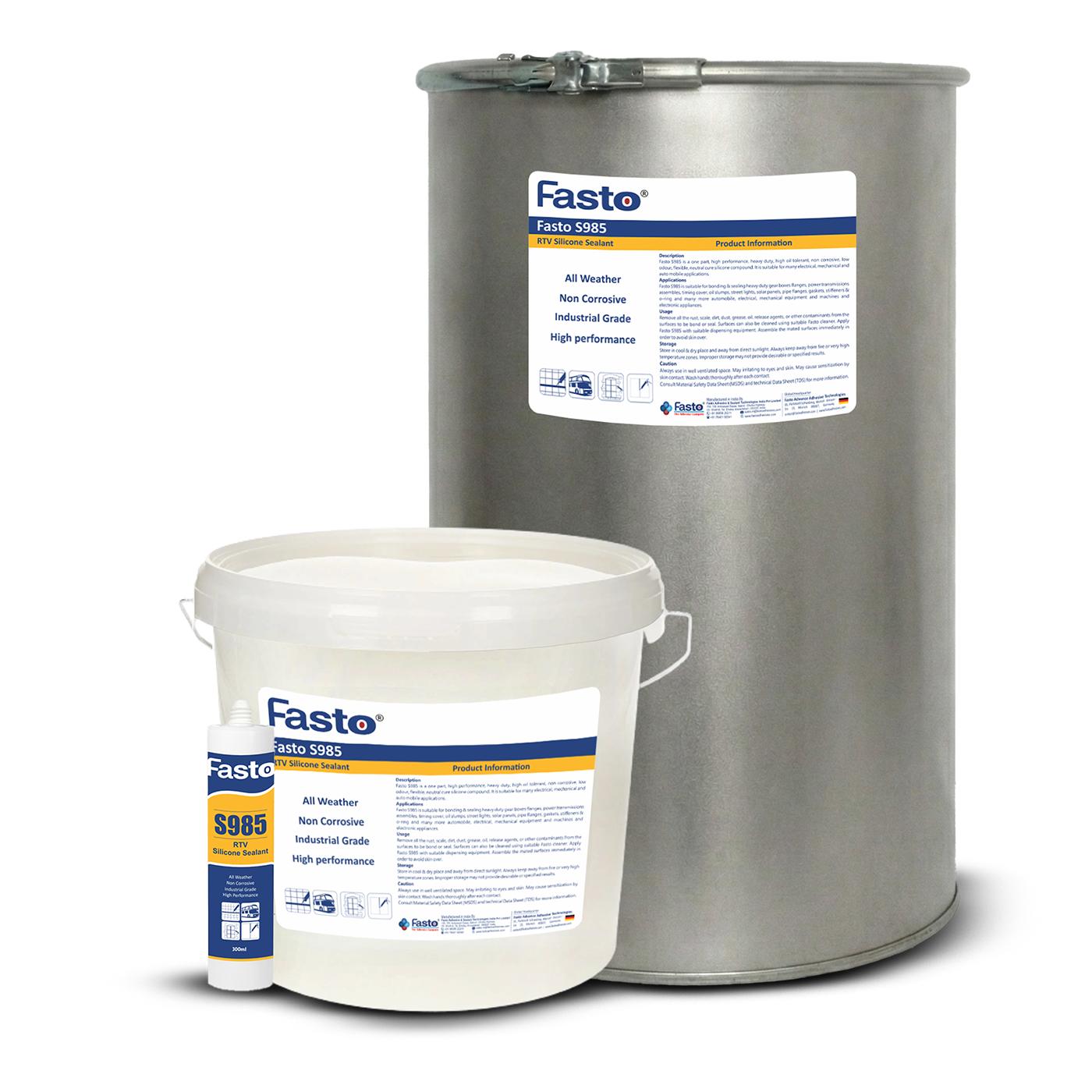
Fasto S985
One-part heavy-duty RTV silicone sealant with neutral cure, high oil tolerance and flexible sealing performance for demanding mechanical, gearbox and flange applications.
View Product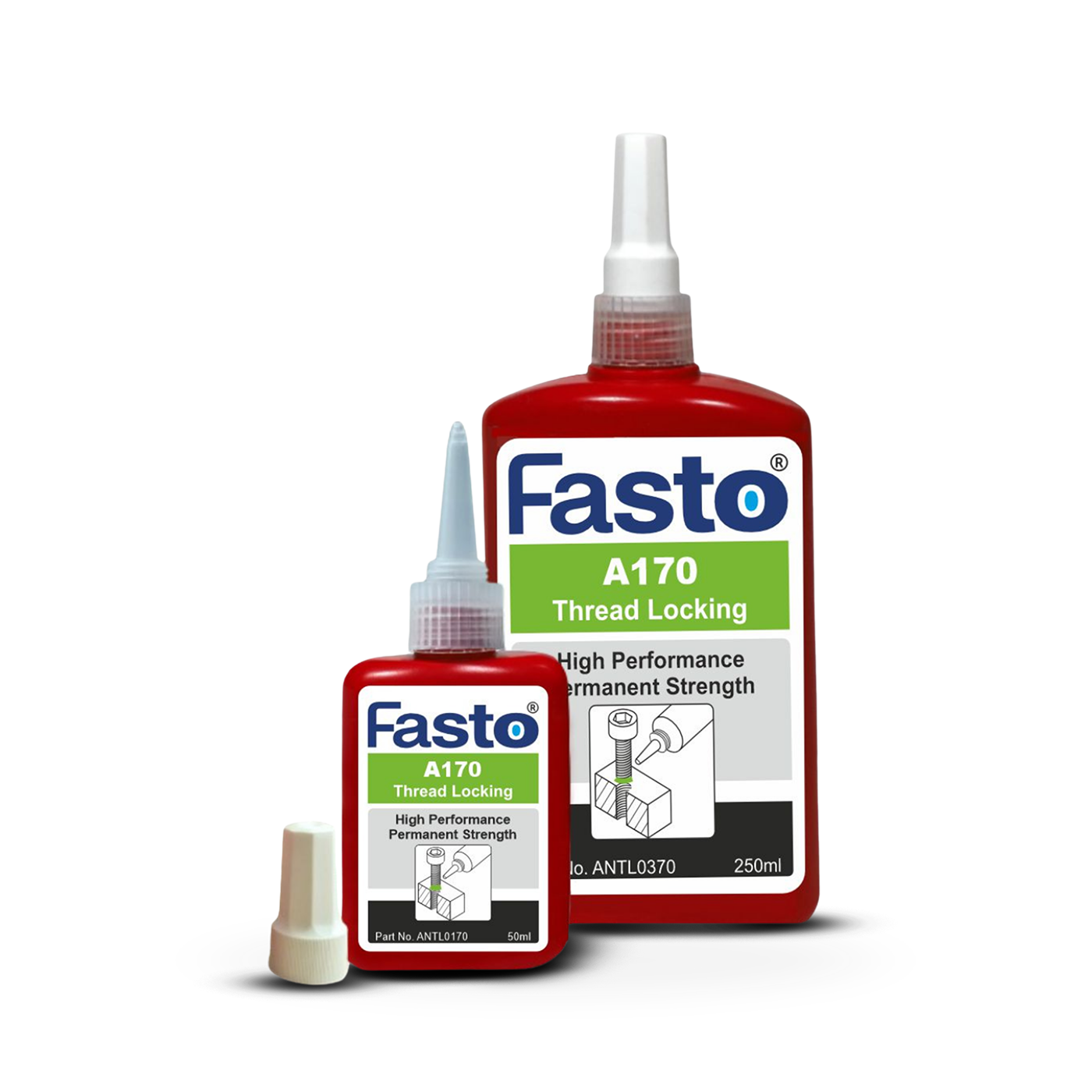
Fasto A170
High-strength permanent anaerobic threadlocker for suitable medium-to-coarse threaded fasteners where resistance to vibration-induced loosening and long-term retention are required.
View ProductRotavator Application to Fasto Product Mapping
Initial mapping follows Fasto's current Rotavator listing. Final product selection should be validated against the actual assembly and operating conditions.
| Rotavator Application | Primary Function | Fasto Product | Technology |
|---|---|---|---|
| Gearbox Housing | Housing and flange sealing | S985 | Heavy-Duty RTV Silicone |
| Flange & Mechanical Joints | Leak-resistant joint sealing | S985 | Neutral-Cure RTV Silicone |
| Oil / Grease Exposure | Fluid leakage prevention | S985 | Oil-Tolerant Silicone Sealant |
| Heavy-Duty Fasteners | Vibration-resistant retention | A170 | High-Strength Anaerobic Threadlocker |
| Housing Mounting Fasteners | Permanent threaded locking | A170 | Maximum Strength Threadlocker |
| Field-Service Reassembly | Sealing and fastener security | S985 + A170 | RTV Silicone + Anaerobic Threadlocker |
What Matters in Rotavator Adhesive & Sealant Selection?
Oil & Lubricant Exposure
Gearbox and transmission sealing requires consideration of oils, grease, lubricants and the temperature conditions of the joint.
Vibration & Shock
Continuous vibration and field shock loads make sealing and fastener integrity important for rotating and mechanical assemblies.
Outdoor Environment
Rotavators operate around dust, mud, moisture, agricultural chemicals and changing weather conditions.
Service Life
Appropriate sealing and threadlocking technologies can support durable assemblies, reduce leakage and reduce the need for repeated maintenance.
How to Select the Right Rotavator Adhesive or Sealant
Selection should consider the actual component, substrate, operating environment and manufacturing or maintenance process.
01. Component
- Gearbox housings
- Flanges and covers
- Mechanical joints
- Mounting fasteners
02. Substrate
- Steel
- Cast iron
- Aluminium
- Other compatible metals
03. Fluid Exposure
- Gear oils
- Grease
- Lubricants
- Cleaning fluids
04. Environment
- Dust and mud
- Moisture
- Chemicals
- Outdoor exposure
05. Mechanical Conditions
- Vibration
- Shock loading
- Thermal movement
- Fastener loading
06. Service Process
- Surface preparation
- Dispensing method
- Assembly sequence
- Cure and validation
Applying Adhesives & Sealants in Rotavator Manufacturing
The exact process depends on the selected product, component and joint design.
Surface Preparation
Clean the sealing or threaded surfaces and remove oil, grease, dust, rust and other contaminants according to the product requirements.
Controlled Application
Apply a continuous bead of sealant to the defined flange or joint, or apply threadlocker to the specified fastener threads.
Assembly
Assemble housings, covers and fasteners according to the specified production sequence and torque requirements.
Cure & Validation
Allow the selected material to cure under the required conditions and validate leakage, fastening and joint integrity.