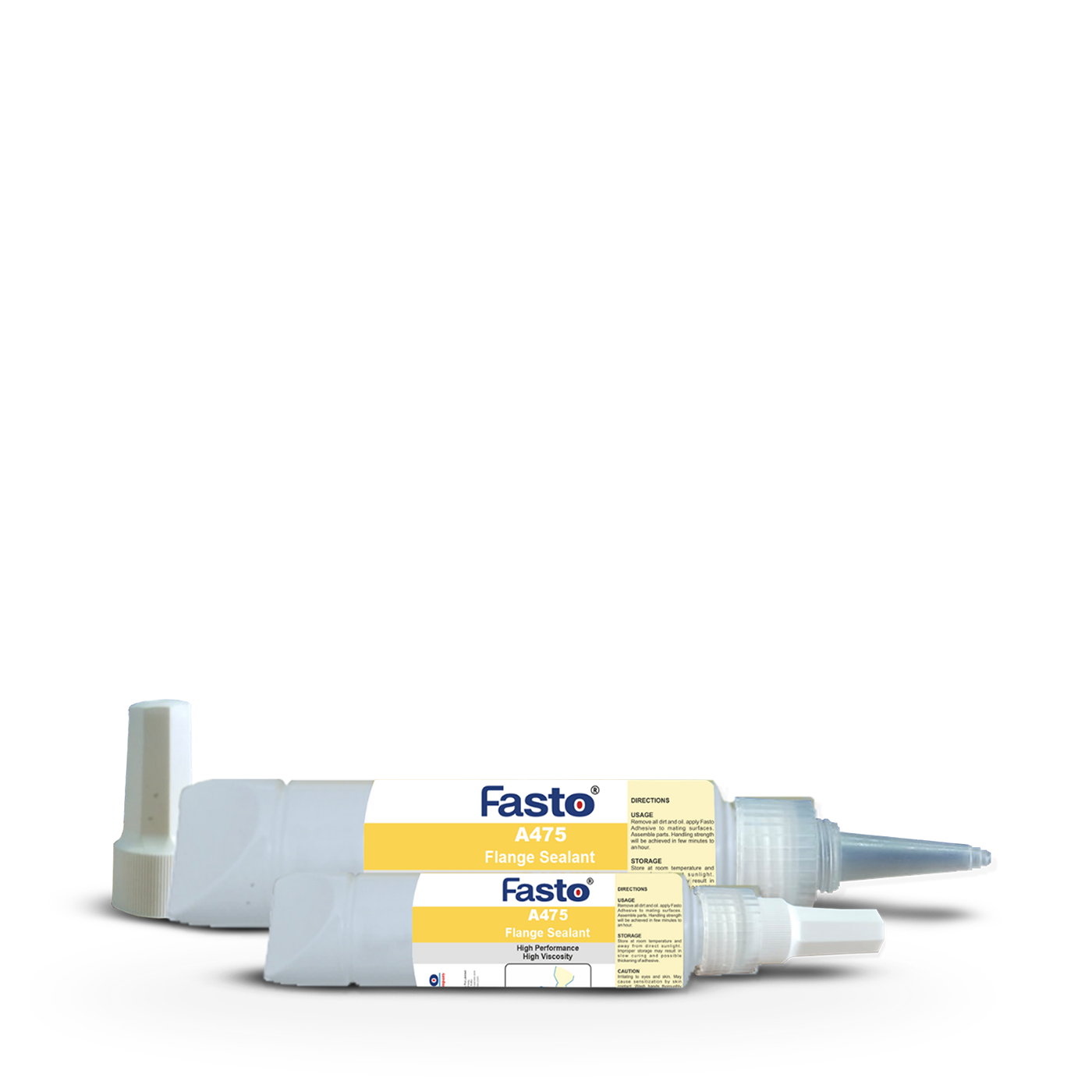
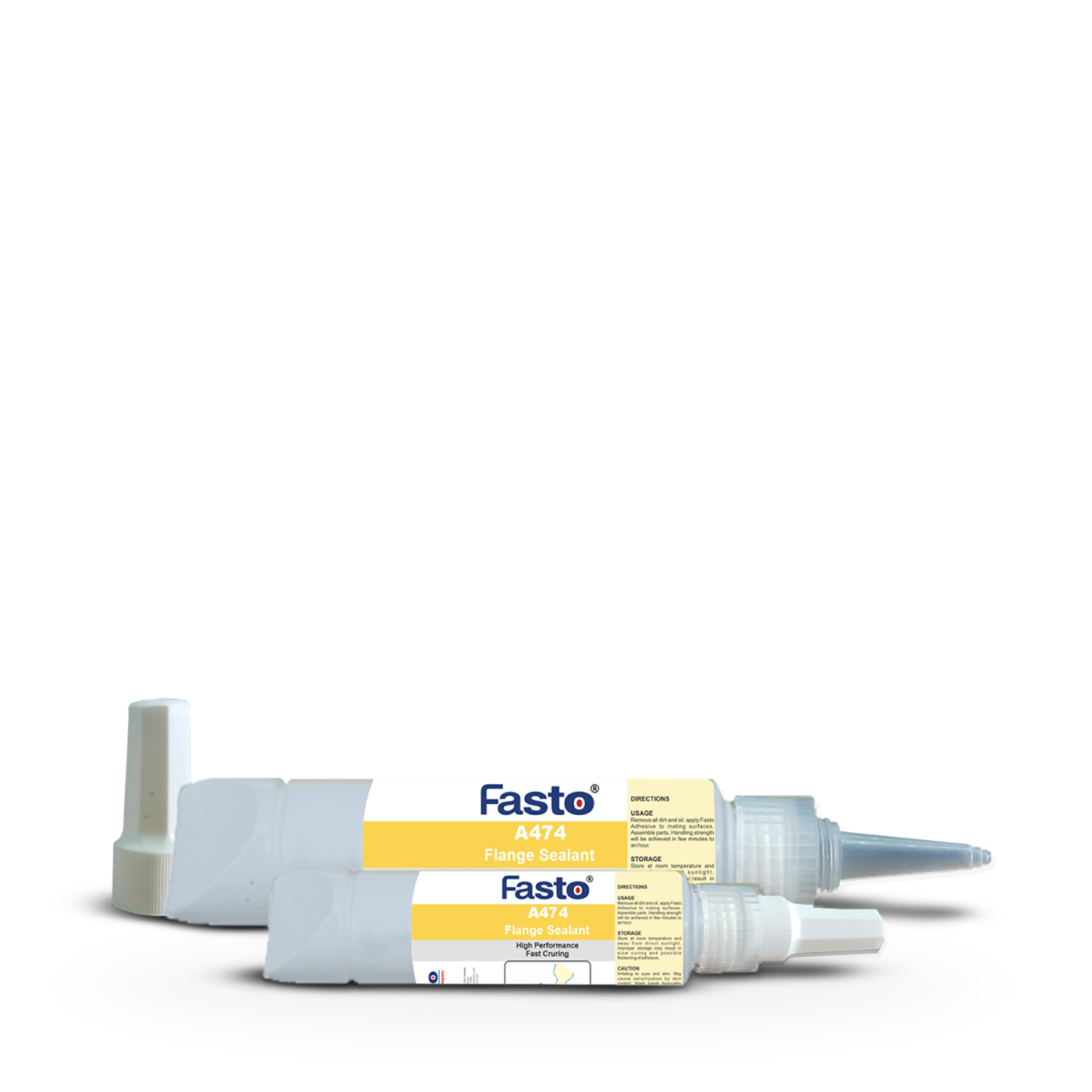
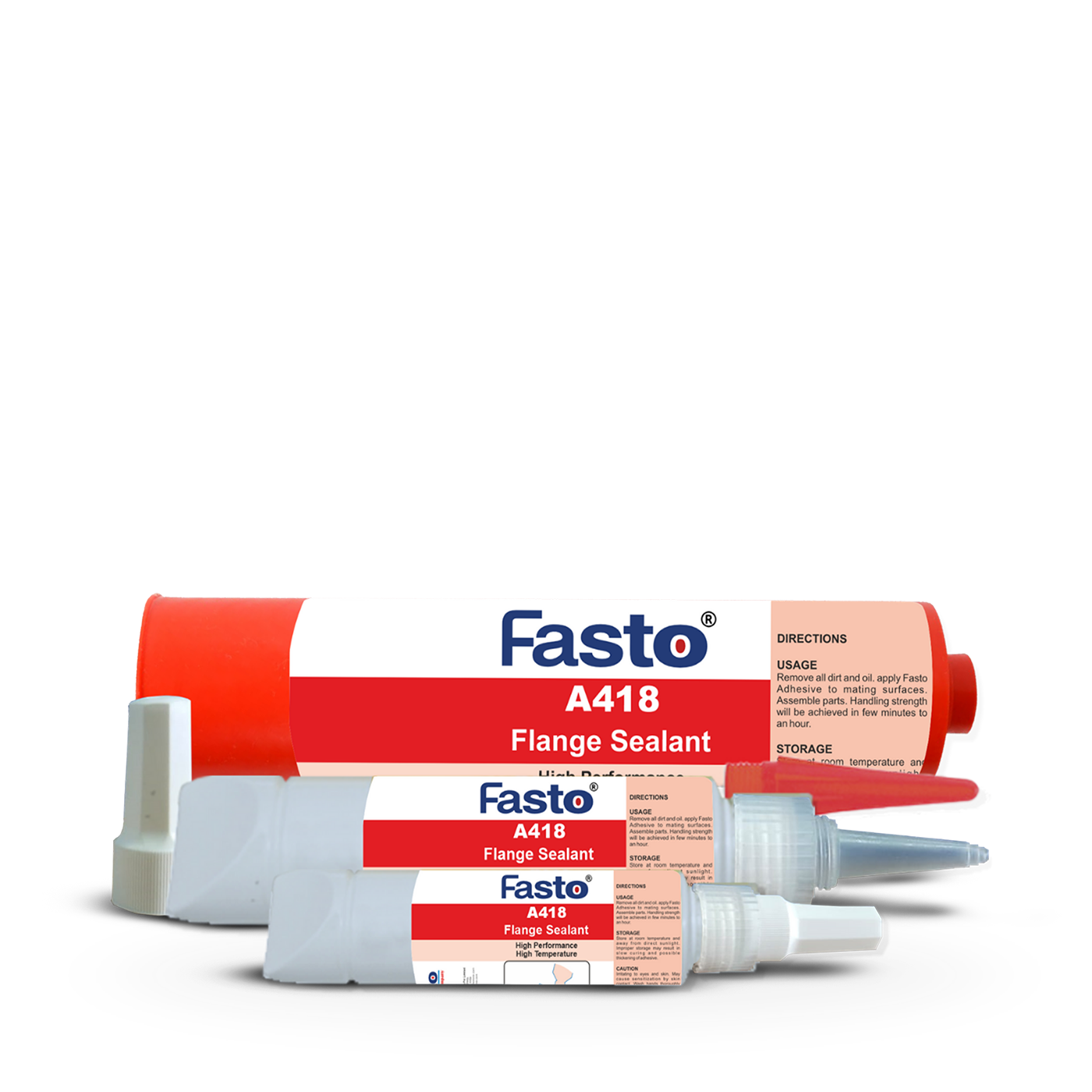
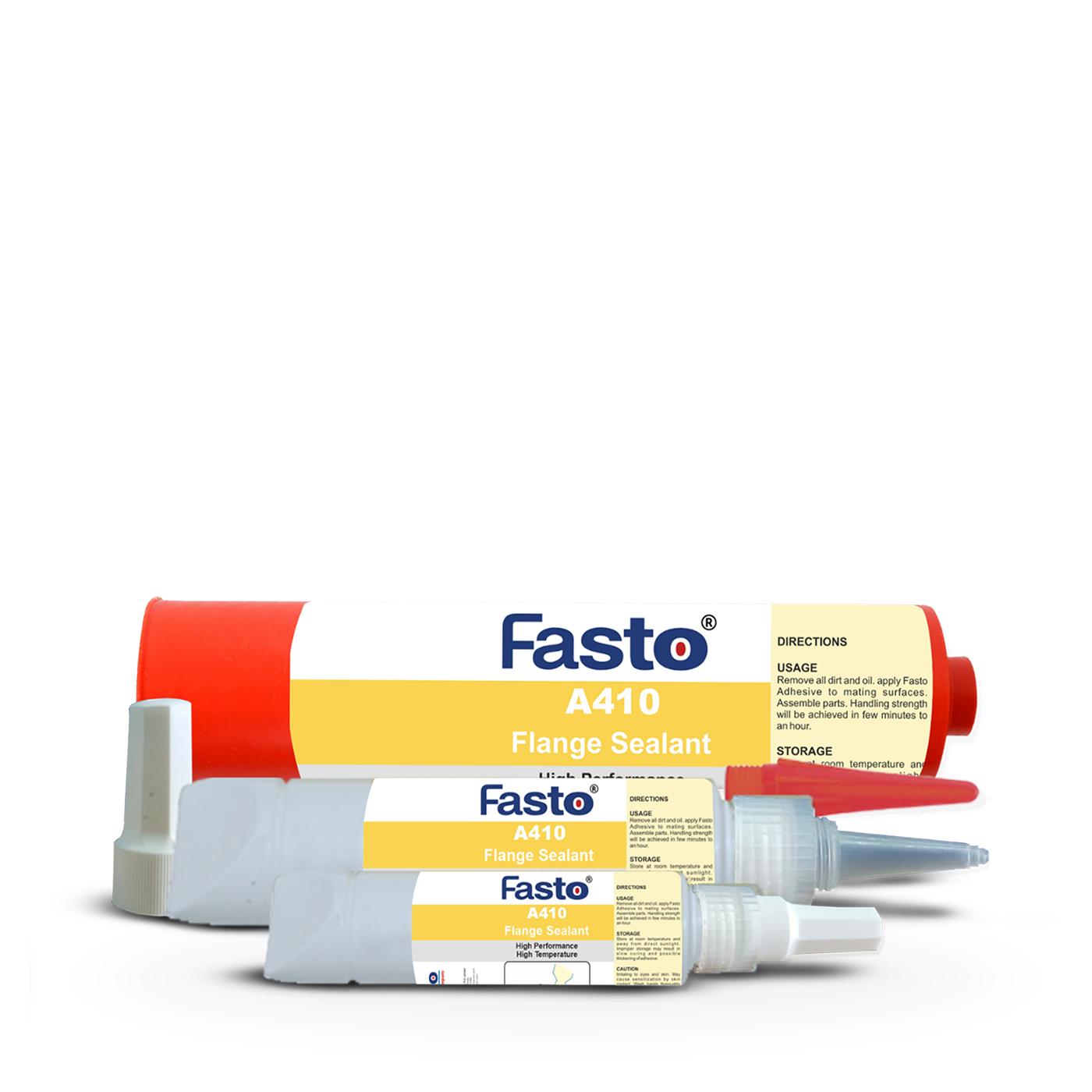
Flange Sealants
Flange Sealants

Flange Sealants for Reliable Gasket Sealing & Leak Prevention

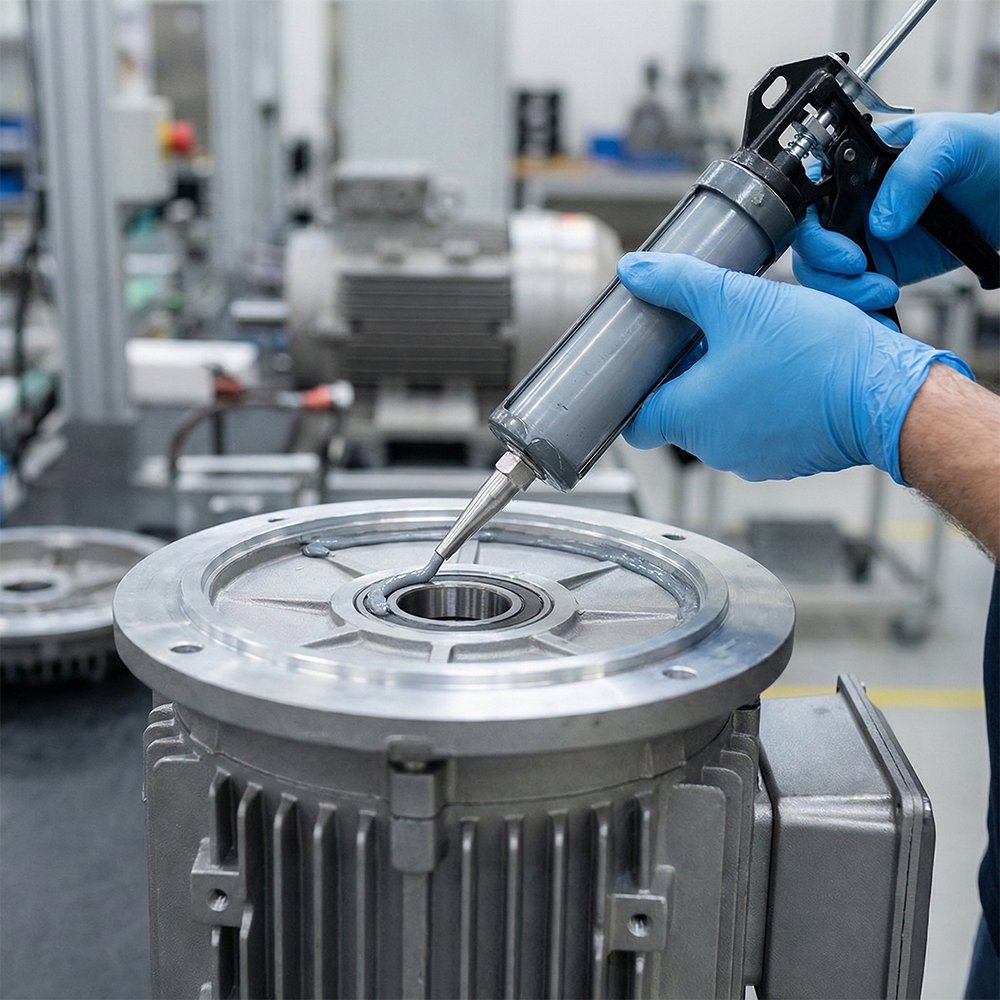
Fasto Flange Sealants are high-performance anaerobic sealing compounds designed to create leak-proof seals between rigid metal flanges. These advanced sealants replace conventional flange gasket rubber and pre-cut rubber gasket for flange applications by forming a durable seal directly between mating surfaces.

Flange sealants cure in the absence of air when confined between metal surfaces, filling microscopic gaps and surface imperfections to prevent leakage of oils, lubricants, fuels, coolants, water, and process fluids.

Widely used across Industrial Machinery, Transportation, Agricultural Machinery, Automotive Manufacturing, LED Equipment, Appliances, and General Engineering industries, Fasto flange sealants help improve equipment reliability while reducing maintenance costs.

What Are Flange Sealants?

Flange sealants are anaerobic liquid gasketing compounds used to seal rigid metal flange assemblies. Unlike conventional flange seals or rubber flange gasket materials, flange sealants cure between closely fitted metal surfaces to form a strong and flexible seal that resists vibration, pressure, and temperature fluctuations.

These sealants eliminate the need for manual gasket cutting, gasket inventory management, and gasket replacement while providing superior sealing performance.

Fasto Flange Sealants offer:

Industries Where Flange Sealants Can Be Used

Flange sealants help protect critical equipment and assemblies used in solar manufacturing and energy systems.

Industrial equipment requires dependable sealing solutions capable of withstanding vibration, temperature fluctuations, and continuous operation.

Transportation equipment relies on secure flange sealing to prevent fluid leakage and improve operational reliability.

Agricultural equipment operates under harsh conditions involving dust, vibration, mud, moisture, and continuous load cycles.

Flange sealants are widely used throughout automotive assembly and maintenance operations.

Flange sealants help improve sealing performance in industrial lighting and electronic equipment housings.

Flange sealants improve durability and leak prevention in appliance manufacturing.

Key Features & Benefits

Conventional Rubber Gaskets

Eliminates the need for pre-cut flange gasket rubber and reduces gasket inventory requirements.

Leak-Proof Sealing

Provides reliable sealing against oils, fuels, coolants, water, and industrial fluids.

Excellent Gap Filling

Fills surface imperfections and machining irregularities for improved sealing performance.

Vibration Resistance

Maintains sealing integrity under vibration, shock, and dynamic loading conditions.

Corrosion Protection

Protects flange assemblies from moisture and environmental contamination.

Reduced Maintenance Costs

Minimizes gasket replacement and helps improve equipment uptime.

Flange Sealant Solutions

General Purpose Flange Sealant

Suitable for industrial machinery, pumps, compressors, and gearbox assemblies.

Flexible Flange Sealant

Designed for applications experiencing vibration and thermal expansion.

High-Performance Flange Sealant

Provides superior sealing for demanding industrial and automotive environments.

Industrial Gasket Replacement Compound

Replaces conventional rubber flange gasket materials with a formed-in-place seal.

Anaerobic Flange Sealant

Ideal for rigid metal flange assemblies requiring long-term sealing reliability.

Why Choose Fasto Flange Sealants?

Fasto provides industrial-grade flange sealant solutions trusted by manufacturers across Solar Energy, Industrial Machinery, Transportation, Agricultural Machinery, Automotive, LED Lighting, and Appliance industries.


Our flange sealants are engineered to deliver:

FAQs

What are Flange Sealants Used For?

Flange sealants are commonly used for sealing rigid flange connections in: Gearboxes, Pumps, Compressors, Engines, Hydraulic systems, Industrial machinery, Transmission housings, Valve assemblies. They help eliminate leakage while improving assembly reliability.

How Does a Flange Sealant Work?

Flange sealants cure when confined between metal surfaces and deprived of oxygen. Once cured, they form a durable seal that fills gaps, prevents leakage, and resists vibration, pressure, and thermal cycling.

What is The Difference Between a Flange Sealant and a Gasket?

Traditional gaskets are pre-formed materials placed between mating surfaces, whereas flange sealants are liquid compounds that cure in place. Flange sealants conform to surface irregularities, reduce inventory requirements, and provide uniform sealing across the entire flange surface.

Can Flange Sealants Replace Conventional Gaskets?

In many applications, flange sealants can replace conventional cut gaskets and gasket sheets. They are often used in rigid metal-to-metal flange assemblies where a reliable, leak-proof seal is required.

What Materials Can Flange Sealants be Used On?

Flange sealants are commonly used on: Steel, Stainless Steel, Cast Iron, Aluminum, Brass, Machined Metal Components. Compatibility may vary depending on the specific product grade and application.

Are Flange Sealants Resistant to Oils and Fluids?

Yes. Industrial flange sealants are designed to resist a wide range of fluids including: Lubricating oils, Hydraulic fluids, Gear oils, Coolants, Fuels, Water-based fluids. Always verify compatibility for specific media and operating conditions.

Can flange sealants withstand vibration?

Yes. Flange sealants provide excellent resistance to vibration, shock, and mechanical movement, helping maintain long-term sealing performance in dynamic operating environments.

Are Flange Sealants Suitable for High-Pressure Applications?

Yes. Many anaerobic flange sealants are engineered to withstand high operating pressures while maintaining reliable sealing performance in industrial equipment and fluid handling systems.

Can flange sealants tolerate high temperatures?

Industrial-grade flange sealants are formulated to perform across a wide temperature range, making them suitable for automotive, manufacturing, power generation, and heavy engineering applications.

What Industries Use Flange Sealants?

Flange sealants are widely used in: Automotive Manufacturing, Industrial Machinery, Power Generation, Oil & Gas, Chemical Processing, Heavy Engineering, Hydraulic Equipment, Process Industries

Do Flange Sealants Prevent Corrosion?

Yes. By sealing the interface between mating surfaces, flange sealants help prevent moisture ingress and reduce corrosion, oxidation, and surface degradation.

How Long Does Flange Sealant Take to Cure?

Cure times vary depending on the product formulation, substrate material, temperature, and flange design. Initial sealing may occur within a few hours, while full cure is typically achieved within 24 hours.

How do I apply flange sealant?

For optimal performance: Clean both flange surfaces thoroughly, Apply a continuous bead of sealant around the flange area, Assemble the components immediately, Tighten fasteners according to specifications, Allow adequate curing time before full operation.

What are the benefits of using flange sealants?

Key benefits include: Leak-proof sealing, Gasket replacement capability, Excellent vibration resistance, Resistance to oils and chemicals, Corrosion protection, High-pressure performance, Reduced maintenance requirements, Improved equipment reliability.

Can Flange Sealants be Removed During Maintenance?

Yes. Most flange-sealed assemblies can be disassembled using standard maintenance procedures. The ease of removal depends on the sealant grade, flange size, and operating conditions.

How Do I Choose The Right Flange Sealant?

The ideal flange sealant depends on: Flange design, Operating pressure, Temperature range, Fluid compatibility, Gap size, Maintenance requirements, Equipment type. Selecting the correct grade ensures long-term sealing performance and operational reliability.

Scroll to Top