
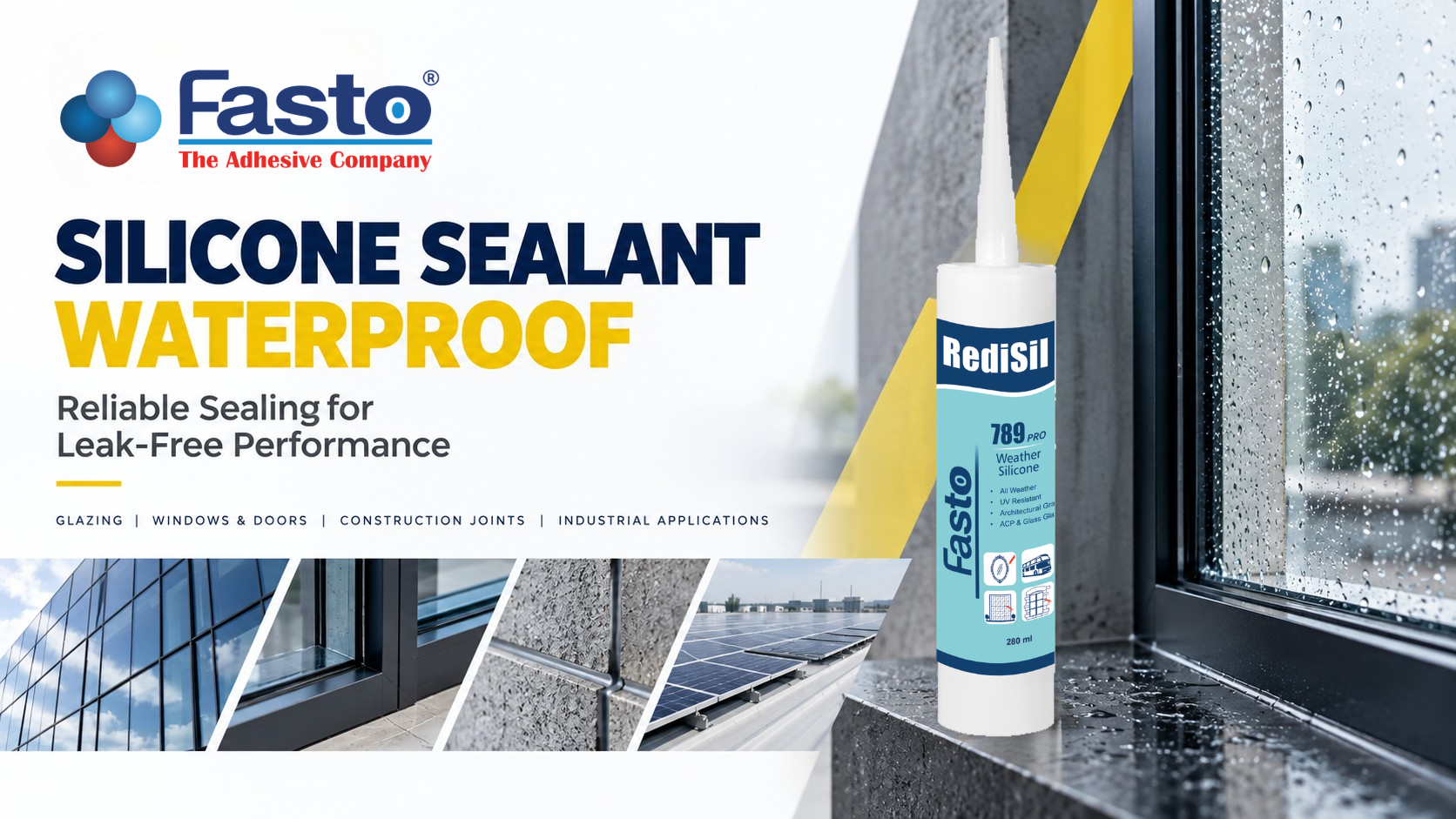
Water leakage can cause more than just inconvenience. Continuous exposure to moisture can damage walls, ceilings, windows, bathroom fittings, glass surfaces, and building joints. One of the most practical solutions for preventing water penetration is a silicone sealant waterproof solution designed to create a flexible, durable and water-resistant barrier.
Silicone sealants are widely used in construction, glazing, sanitary applications, kitchens, bathrooms, windows, doors and other areas exposed to moisture. Their flexibility and strong resistance to water and environmental conditions make them a popular choice for sealing joints and gaps.
In this guide, we will understand how waterproof silicone sealants work, where they can be used, how to select the right product and how proper application can improve long-term performance.
What Is Silicone Sealant Waterproofing?
A silicone sealant is a flexible sealing material used to fill gaps, joints, cracks and openings between different surfaces. When properly applied and cured, it forms an elastic seal that helps prevent water and moisture from passing through the joint.
A Waterproof Silicone Sealant is particularly useful in applications where the seal is regularly exposed to water, humidity or moisture.
Unlike rigid materials such as cement-based fillers, silicone remains flexible after curing. This flexibility allows the sealant to accommodate small movements caused by temperature changes, vibration, building movement and expansion or contraction of substrates.
How Does Silicone Sealant Prevent Water Leakage?
Waterproofing performance depends on creating a continuous and properly bonded seal.
When silicone sealant is applied correctly:
- It fills the gap or joint between surfaces.
- The sealant bonds to the surrounding substrates.
- It cures to form a flexible rubber-like seal.
- The cured seal acts as a barrier against water and moisture.
- Its flexibility allows the joint to move without easily cracking or breaking.
This makes silicone sealants especially suitable for joints where some movement is expected.
Why Choose Silicone Sealant for Waterproofing?
There are several reasons silicone is commonly selected for moisture-exposed applications.
1. Excellent Water Resistance
A properly cured silicone seal can provide effective resistance against water penetration, making it suitable for areas such as bathrooms, kitchens, glazing joints and exterior applications.
2. Flexibility
Buildings and materials naturally experience movement. Silicone sealants can accommodate movement better than many rigid sealing materials, helping maintain the integrity of the joint.
3. Strong Adhesion
Depending on the formulation, silicone sealants can adhere to substrates such as glass, aluminium, ceramics, tiles and other commonly used construction materials.
4. Resistance to Weather Conditions
Exterior joints can experience sunlight, rain, humidity and temperature fluctuations. Suitable silicone formulations are designed to withstand these environmental conditions.
5. Long-Lasting Sealing
When the correct sealant is selected and applied to a properly prepared surface, silicone can provide a durable sealing solution that helps reduce recurring leakage problems.
Where Can Waterproof Silicone Sealant Be Used?
The right silicone sealant can be used across a wide range of residential, commercial and industrial applications.
Bathrooms and Sanitary Areas
Bathrooms are among the most common areas where waterproof sealing is required.
Silicone sealant can be used around:
- Wash basins
- Bathroom fixtures
- Shower areas
- Bathtubs
- Tiles and joints
- Countertops
- Glass shower enclosures
- Plumbing fixture interfaces
A suitable sanitary-grade silicone may also offer resistance to mould and mildew growth, depending on the product formulation.
Kitchens
Water can enter small gaps around kitchen sinks, countertops and backsplashes. Silicone sealants can help seal these interfaces and reduce moisture penetration.
Windows and Doors
Gaps around window frames and door frames can allow rainwater and air to enter a building.
A suitable silicone sealant can be used for sealing joints around:
- Aluminium windows
- uPVC windows
- Glass panels
- Door frames
- Window-to-frame interfaces
- Exterior perimeter joints
Glass and Glazing Applications
Silicone sealants are widely used in glazing because of their adhesion to glass and flexibility.
They can help seal joints between glass and compatible framing materials while providing protection against water ingress.
Construction Joints
Construction and building structures often contain joints where different materials meet. Selecting an appropriate sealant helps maintain the joint’s resistance to moisture while allowing necessary movement.
Silicone Sealant vs. Other Waterproofing Materials
Silicone sealant should not be confused with complete waterproofing systems.
For example, a waterproofing membrane may be used to protect an entire surface, while silicone sealant is generally used to seal specific joints, gaps and interfaces.
Solution | Typical Purpose |
Silicone sealant | Sealing joints, gaps and interfaces |
Waterproofing membrane | Protecting larger surface areas |
Cementitious waterproofing | Waterproofing concrete and masonry surfaces |
Acrylic sealant | Interior sealing and paintable joints |
PU sealant | Flexible sealing and construction applications |
The best solution depends on the substrate, exposure conditions, joint movement and application requirements.
How to Select the Right Waterproof Silicone Sealant
Not every silicone sealant is designed for every application. Choosing the correct product is essential for achieving reliable performance.
Consider the following factors.
Application
First determine where the sealant will be used. A bathroom, window, glass façade and industrial application may require different formulations.
Substrate
Check whether the sealant is compatible with the surfaces being joined. Common substrates include glass, aluminium, ceramic, tiles, concrete and other construction materials.
Indoor or Outdoor Use
Exterior applications require a sealant capable of handling environmental exposure such as UV radiation, rain and temperature fluctuations.
Joint Movement
If the joint is expected to move significantly, select a sealant designed to accommodate the expected movement.
Moisture and Mould Exposure
For bathrooms and other continuously humid areas, a suitable sanitary silicone formulation may be preferable.
Curing System
Silicone sealants may use different curing technologies. The curing system can affect adhesion, odour, substrate compatibility and application suitability.
Always refer to the product’s Technical Data Sheet before selecting a sealant for a specific application.
How to Apply Silicone Sealant for Waterproofing
Correct application is just as important as selecting the right product.
Step 1: Clean the Surface
Remove dust, dirt, grease, loose particles and other contaminants from the joint.
Step 2: Ensure the Surface Is Suitable
The surface should be sound and properly prepared. Where required, allow wet surfaces to dry before application according to the sealant manufacturer’s recommendations.
Step 3: Prepare the Cartridge
Cut the nozzle at the desired angle and size. Fit the cartridge into a suitable sealant gun.
Step 4: Apply a Continuous Bead
Apply the silicone sealant evenly along the joint. Avoid leaving gaps or discontinuities in the bead.
Step 5: Tool the Sealant
Tool the sealant shortly after application to achieve proper contact with the joint surfaces and a neat finish.
Step 6: Allow Proper Curing
Allow the sealant to cure according to the manufacturer’s instructions. Avoid exposing the joint to conditions that could interfere with curing.
Common Mistakes to Avoid
Even a high-quality waterproof silicone sealant can perform poorly if it is incorrectly applied.
Avoid these common mistakes:
- Applying over dirty surfaces: Dust and grease can reduce adhesion.
- Sealing a wet or unsuitable substrate: Excess moisture or incompatible surfaces may affect bonding and curing.
- Applying an insufficient bead: An undersized seal may not provide adequate joint coverage.
- Ignoring substrate compatibility: Some materials require special preparation or primer.
- Using the wrong sealant: A sanitary application, structural glazing application and exterior construction joint may require different sealant technologies.
- Exposing the joint before curing: Premature exposure can affect the final performance of the seal.
Is Silicone Sealant Completely Waterproof?
A properly selected and correctly applied silicone sealant can provide excellent resistance to water penetration. However, the term “waterproof” should always be considered in relation to the specific product, application and installation conditions.
Performance can be affected by:
- Surface preparation
- Substrate compatibility
- Joint design
- Application thickness
- Sealant adhesion
- Curing conditions
- Joint movement
- Water exposure
- Product selection
For critical applications, always check the manufacturer’s Technical Data Sheet and application recommendations.
How Long Does Waterproof Silicone Sealant Last?
The service life of silicone sealant depends on the product formulation, application, joint design and environmental exposure.
A sealant exposed to continuous sunlight, temperature fluctuations, chemicals or mechanical movement may experience different service conditions from one used indoors.
Proper surface preparation, correct joint design and appropriate sealant selection can significantly contribute to long-term performance.