

Dryers
Adhesives & Sealants in Dryers
- Structural bonding of metal panels, housings, and frames
- Sealing of joints, ducts, and enclosures to prevent heat loss
- Bonding of insulation panels and thermal barriers
- Vibration resistance for rotating and airflow components
Thermal Stability, Sealing & Structural Protection for Dryers
Dryers rely on adhesives and sealants for thermal stability, air duct sealing, insulation bonding and structural assembly. These materials help maintain operational efficiency and protect assemblies exposed to heat and vibration.
Fasto's current Appliances documentation identifies structural bonding of metal panels, housings and frames, sealing of joints and ducts, insulation bonding, and vibration resistance for rotating and airflow components as key Dryer applications.
Product selection should be based on the component, substrate, operating temperature, thermal cycling, joint geometry, vibration and manufacturing process.
- Metal panel and housing bonding
- Frame and structural component assembly
- Air duct and enclosure sealing
- Heat-loss prevention
- Insulation and thermal barrier bonding
- Vibration resistance for rotating components
Critical Adhesive & Sealant Applications in Dryers
Fasto solutions can support structural bonding, thermal sealing, insulation assembly and vibration-resistant joints throughout dryer manufacturing.
Metal Panel & Housing Bonding
Structural adhesives can support the assembly of metal panels, housings and frames where durable component joining is required.
- Metal panels
- Machine housings
- Structural frames
- Rigid component assemblies
Joints, Ducts & Enclosure Sealing
High-temperature sealants can help maintain sealed interfaces and reduce unwanted heat and air leakage around suitable joints.
- Air ducts
- Housing joints
- Enclosures
- Thermal sealing
High-Temperature Sealing
Dryer components exposed to elevated temperatures require sealants capable of maintaining joint integrity under thermal cycling and heat exposure.
- Hot-zone interfaces
- Thermal joints
- High-temperature sealing
- Thermal cycling
Insulation Panel & Thermal Barrier Bonding
Adhesives and sealants can support the positioning and bonding of insulation panels and thermal barrier components.
- Insulation panels
- Thermal barriers
- Heat-loss reduction
- Thermal enclosure assemblies
Rotating & Airflow Component Protection
Dryer rotating and airflow components can generate vibration and movement, making joint integrity and fastening reliability important.
- Rotating components
- Fans and airflow systems
- Vibration-prone joints
- Dynamic assemblies
Multi-Material Dryer Assembly
Dryer construction can involve metals, insulation materials, plastics and other substrates requiring compatible bonding and sealing technologies.
- Metal components
- Plastic components
- Insulation materials
- Mixed-material assemblies
Fasto Solutions for Dryer Applications
Fasto's current Appliances page specifically recommends A170, S960 and S985 for Dryer applications.
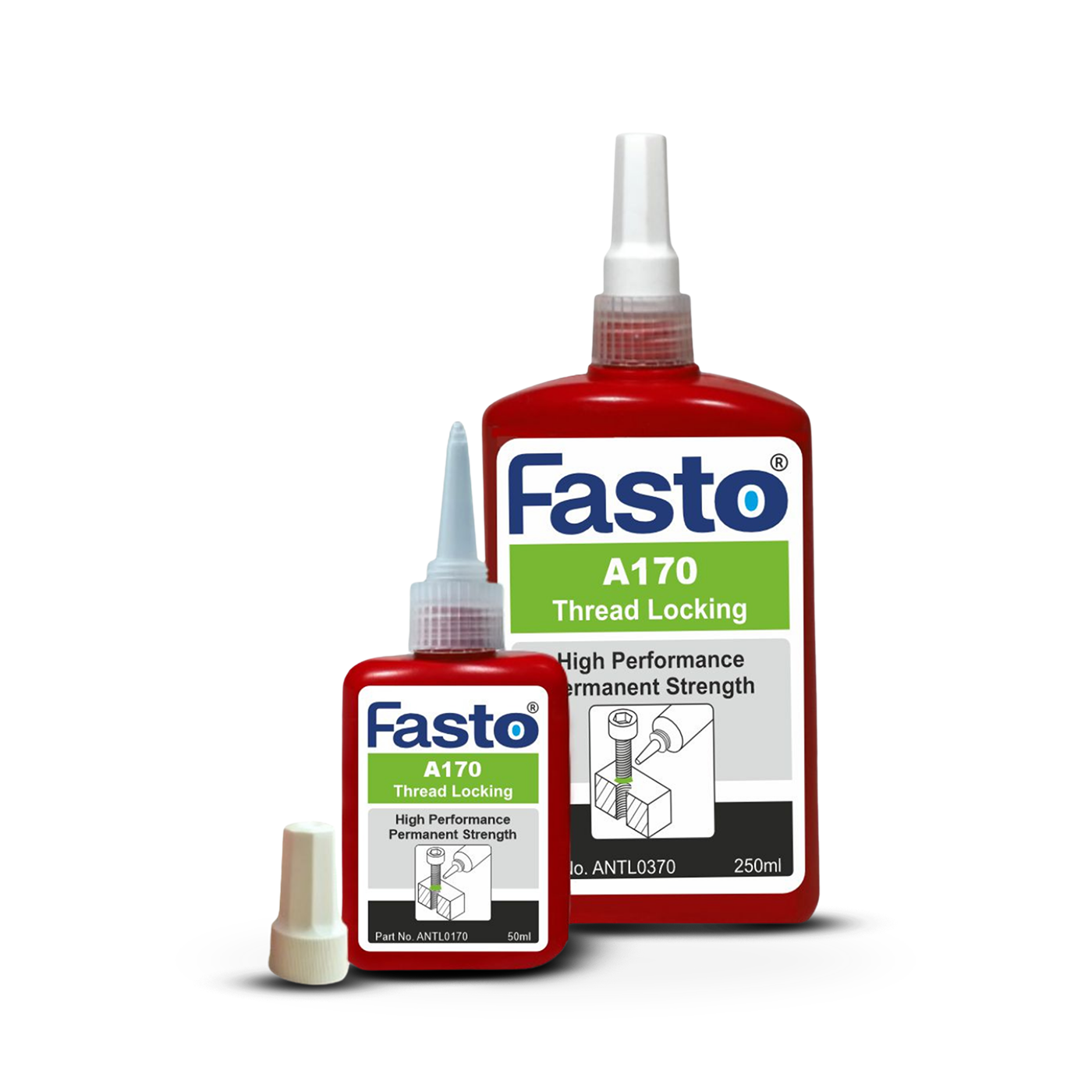
Fasto A170
A high-strength permanent anaerobic threadlocker designed to secure suitable metal fasteners against vibration-induced loosening and leakage in demanding assemblies.
View Product
Fasto S960
A one-part high-performance RTV silicone sealant designed for high-temperature sealing, bonding and glazing, with excellent flexibility and thermal resistance.
View Product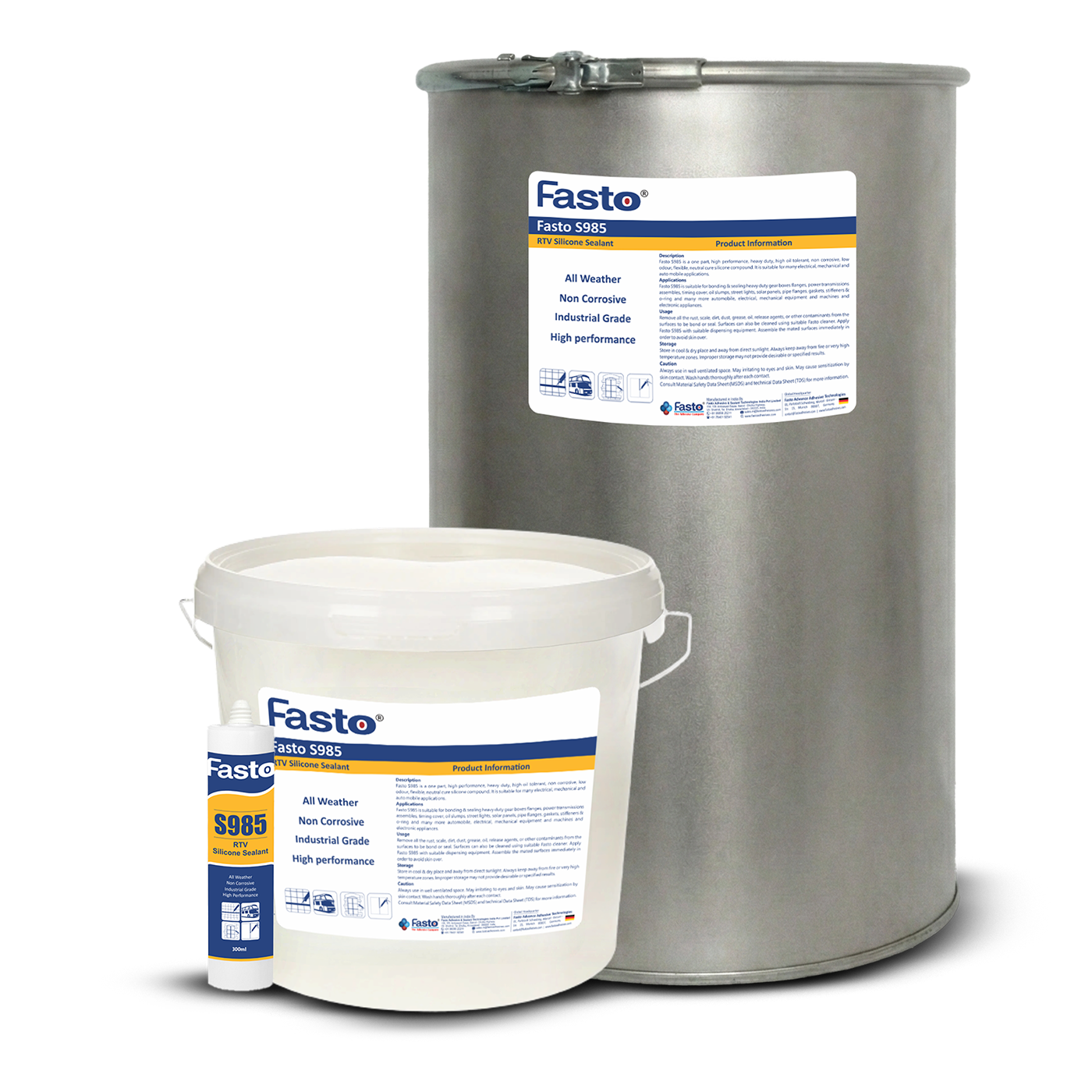
Fasto S985
A heavy-duty RTV silicone sealant offering high oil tolerance, strong sealing performance and resistance to thermal cycling and vibration in demanding mechanical joints.
View ProductDryer Application to Fasto Product Mapping
Initial mapping follows Fasto's current Dryer recommendations. Final product suitability should be validated against the actual substrate, operating temperature, joint geometry and service conditions.
| Dryer Application | Primary Function | Fasto Product |
|---|---|---|
| High-Temperature Joints | High-temperature sealing and thermal stability | S960 |
| Ducts & Airflow Interfaces | Airtight sealing and prevention of heat or air leakage | S960 |
| Thermal Enclosures & Flanges | Durable mechanical sealing under heat and movement | S985 |
| Rotating Component Fasteners | Vibration-resistant threadlocking | A170 |
| Structural Metal Assemblies | Fastener retention and assembly reliability | A170 |
| High-Temperature Mechanical Joints | Flexible, high-temperature sealing | S960 S985 |
What Matters in Dryer Adhesive & Sealant Selection?
High Temperature
Dryer assemblies can experience elevated temperatures, making thermal resistance and long-term joint integrity important for suitable applications.
Thermal Cycling
Repeated heating and cooling can cause expansion and contraction, so flexible sealing solutions may be required for selected joints.
Vibration & Movement
Rotating and airflow components can generate vibration and movement, requiring reliable fastening and joint integrity.
Air & Heat Management
Proper sealing of ducts and enclosures helps control air leakage and unwanted heat loss in suitable dryer assemblies.
How to Select the Right Adhesive or Sealant for Dryers
Product selection should consider the component, substrate, temperature, thermal cycling, vibration and production process.
01. Component
- Metal panels
- Housings and frames
- Air ducts
- Rotating components
02. Substrate
- Steel and metal
- Aluminium
- Plastics
- Insulation materials
03. Temperature
- Normal operating temperature
- Peak temperature
- Continuous heat exposure
- Thermal cycling
04. Environment
- Hot air exposure
- Humidity
- Dust
- Household operating conditions
05. Mechanical Conditions
- Vibration
- Rotational movement
- Thermal expansion
- Joint movement
06. Production Process
- Surface preparation
- Dispensing method
- Assembly sequence
- Cure / fixture time
Applying Adhesives & Sealants in Dryer Manufacturing
The exact process depends on the selected product, substrate, component design and required operating conditions.
Surface Preparation
Clean bonding, sealing or threaded surfaces and remove dust, grease, oil, rust and other contaminants according to the selected product requirements.
Controlled Application
Apply the selected adhesive or sealant as a controlled bead, bond line or thread application using the specified dispensing method.
Assembly
Position components or assemble threaded parts within the required working or fixture window and maintain the specified alignment.
Cure & Validation
Allow the material to achieve the required handling or cure condition, then validate sealing, bonding and fastening performance under representative conditions.